

If you enjoy baking but want an easy egg substitute, a flax egg Recipe is one of the simplest solutions. A flax egg is a popular vegan egg substitute made from ground flaxseed and water. When mixed together, the flaxseed absorbs the liquid and forms a gel-like texture that works as a binding ingredient in baking recipes. Because of this, many people use it as a flaxseed egg replacement in cookies, muffins, pancakes, and quick breads.
Learning how to make a flax egg is quick and requires only two basic ingredients you may already have in your kitchen. The simple flax egg ratio makes it easy to replace regular eggs while keeping recipes soft and moist. Whether you follow a plant-based diet, need an egg substitute for baking, or just want to try something new, a flax egg substitute can be a reliable and healthy option.
Quick Answer: What Is a Flax Egg?
A flax egg is a simple vegan egg substitute made by mixing ground flaxseed (flaxseed meal) with water. When the mixture rests for a few minutes, the flaxseed absorbs the liquid and forms a gel-like texture that works as a binding agent in baking recipes.
The standard flax egg ratio is:
1 tablespoon ground flaxseed + 3 tablespoons water = 1 flax egg
After mixing, let the mixture sit for 5–10 minutes until it thickens. This process creates a natural flaxseed egg replacement that helps hold ingredients together in baked goods.
A flax egg substitute works best in recipes that need binding rather than heavy structure. It is commonly used as an egg substitute for baking in foods like:
- Cookies
- Muffins
- Pancakes
- Brownies
- Quick breads
Because it is easy to prepare and requires only two ingredients, many people use a flax egg for baking when making vegan or egg-free recipes.
What Is a Flax Egg?
A flax egg is a simple egg substitute made from ground flaxseed and water. When these two ingredients are mixed together, the flaxseed absorbs the liquid and forms a thick, gel-like mixture. This texture helps bind ingredients in recipes, which is why it works well as a flaxseed egg replacement in many baked goods.
In traditional baking, eggs help hold ingredients together, add moisture, and improve texture. A flax egg substitute can perform a similar binding role because flaxseed contains soluble fiber that becomes sticky when mixed with water. This natural gel acts as a binding agent, helping ingredients stay combined during baking.
Many people use a vegan egg replacement like flax eggs when they follow a plant-based or egg-free diet. It is especially popular among vegans, people with egg allergies, and those looking for healthier baking alternatives. Since flaxseed is rich in fiber, healthy fats, and nutrients, it can also add a small nutritional boost to recipes.
Because it is easy to prepare and requires only two basic ingredients, a flaxseed egg replacement has become one of the most common and reliable substitutes used in vegan baking and plant-based cooking.
Flax Egg Ratio (Perfect Measurement Guide)

You might also like: The Best Poulet au Coco Recipe
The most important step in making a flax egg is using the correct flax egg ratio. This simple measurement helps create the thick, gel-like texture needed for a reliable flax egg substitute in baking.
The standard flax egg ratio is:
1 tablespoon ground flaxseed + 3 tablespoons water = 1 flax egg
After mixing the ingredients, let the mixture sit for about 5–10 minutes. During this time, the ground flaxseed absorbs the water and forms a sticky gel. This gel works as a flaxseed egg replacement, helping bind ingredients together in recipes like muffins, pancakes, and cookies.
If your recipe requires more than one egg, you can easily scale the measurements. Use the same flaxseed-to-water ratio for each additional egg.
| Eggs Needed | Flaxseed | Water |
| 1 | 1 tbsp | 3 tbsp |
| 2 | 2 tbsp | 6 tbsp |
| 3 | 3 tbsp | 9 tbsp |
Using the correct flax egg ratio ensures the mixture thickens properly and works effectively as a vegan egg replacement in many baking recipes.
How to Make a Flax Egg (Step-by-Step)
Learning how to make a flax egg is very simple. You only need ground flaxseed (flaxseed meal) and water. In just a few minutes, you can prepare a reliable flax egg substitute that works well as a vegan egg replacement in many baking recipes.
Follow these easy steps:
1. Measure Ground Flaxseed
Start by measuring 1 tablespoon of ground flaxseed. It is important to use ground flaxseed or flaxseed meal, because whole flax seeds will not absorb water properly and will not create the thick texture needed for a flaxseed egg replacement.
2. Add Water
Add 3 tablespoons of water to the flaxseed. This is the standard flax egg ratio used to replace one regular egg in baking.
3. Stir the Mixture
Use a spoon or small whisk to stir the flaxseed and water together until fully combined. Make sure the mixture looks even and no dry flaxseed remains.
4. Let It Sit for 5–10 Minutes
Allow the mixture to rest for about 5 to 10 minutes. During this time, the flaxseed absorbs the water and forms a gel-like consistency. This thick texture helps the flax egg work as an egg substitute for baking.
5. Use It in Your Recipe
Once the mixture becomes thick and slightly sticky, it is ready to use. Add the flax egg substitute to your recipe just as you would add a regular egg when baking cookies, muffins, pancakes, or quick breads.
By following these steps, you can quickly learn how to make a flax egg and use this simple vegan egg replacement in many plant-based recipes.
Ground Flaxseed vs Whole Flaxseed
When making a flax egg substitute, it is important to understand the difference between ground flaxseed and whole flaxseed. Although both come from the same plant, they behave very differently in baking. For a proper flaxseed egg replacement, ground flaxseed (also called flaxseed meal) works much better.
Why Ground Flaxseed Works Better
A flax egg depends on the ability of flaxseed to absorb water and form a gel-like mixture. Ground flaxseed exposes the inner part of the seed, which contains soluble fiber that thickens when mixed with water. This gel creates the binding effect needed for a vegan egg replacement in baking.
Whole flaxseeds, on the other hand, have a hard outer shell. Because of this, they do not absorb water easily and will not create the thick texture required for a reliable flax egg substitute.
How to Grind Flaxseed
If you only have whole flaxseeds at home, you can easily grind them yourself. This allows you to prepare fresh flaxseed meal whenever you need it.
Common ways to grind flaxseed include:
- Coffee grinder – one of the fastest and easiest methods
- Blender – works well for small batches
- Food processor – useful if grinding larger quantities
Grind the seeds until they become a fine powder, which is perfect for making a flax egg for baking.
Storage Tips for Flaxseed Meal
Proper storage helps keep ground flaxseed fresh and prevents it from developing a bitter taste.
Helpful storage tips:
- Store flaxseed meal in an airtight container
- Keep it in the refrigerator or freezer for longer freshness
- Avoid exposure to heat, air, and light
- Use within a few months for the best flavor
Fresh ground flaxseed ensures your flax egg substitute thickens properly and works effectively in recipes like cookies, muffins, pancakes, and quick breads.
Why Flax Eggs Work in Baking (Science Explained)

A flax egg works well in baking because of the natural properties found in flaxseed. When ground flaxseed is mixed with water, it creates a thick, sticky mixture that behaves similarly to an egg in certain recipes. This is why many bakers use it as a reliable flax egg substitute and vegan egg replacement.
Soluble Fiber in Flaxseed
Flaxseed is rich in soluble fiber, which is a type of fiber that absorbs water and forms a soft gel. When you mix flaxseed meal with water, the fiber quickly begins to swell and thicken. This process is what allows a flaxseed egg replacement to hold ingredients together in baking.
Mucilage Gel Formation
Another important reason flax eggs work is the formation of mucilage, a natural plant compound found in flaxseed. When water is added, mucilage forms a gel-like substance. This gel gives the mixture its sticky consistency and helps mimic the texture of a regular egg.
Because of this gel formation, a flax egg substitute can help stabilize batters and doughs in many baked goods.
Binding Properties in Baked Goods
Eggs often act as a binding ingredient in baking, meaning they help keep all the ingredients combined. A flax egg can perform a similar role because the gel created from flaxseed and water helps ingredients stick together.
This binding ability makes flax eggs ideal for baking recipes such as:
- Cookies
- Muffins
- Brownies
- Pancakes
- Quick breads
However, while a vegan egg replacement like a flax egg works well for binding, it does not provide as much structure or lift as regular eggs. That is why it works best in dense baked goods rather than light or airy desserts.
Understanding the science behind how a flax egg substitute works helps bakers use it more effectively and achieve better results in egg-free and plant-based baking.
How Flax Eggs Affect Baking Texture
When using a flax egg substitute, it is helpful to understand how it changes the texture of baked goods. Because a flax egg works mainly as a binding ingredient, it can slightly affect moisture, density, and crumb structure in recipes. Knowing these effects helps you use a vegan egg replacement more successfully in baking.
Moisture Retention
One advantage of a flaxseed egg replacement is its ability to hold moisture. The gel formed by ground flaxseed and water keeps the batter slightly hydrated during baking. This can help baked goods stay soft and moist, especially in recipes like muffins, brownies, and quick breads. Because of this moisture-retaining quality, a flax egg substitute often works well in recipes that benefit from a tender texture.
Density of Baked Goods
Unlike regular eggs, a flax egg does not trap as much air during mixing. As a result, baked goods made with a vegan egg replacement can be slightly denser. This is usually not a problem in recipes that are naturally dense, such as cookies, pancakes, or banana bread. However, very light desserts that depend on eggs for lift may not rise as much when using a flax egg substitute.
Crumb Structure
The crumb structure refers to the inside texture of baked goods. Because a flaxseed egg replacement acts mainly as a binder, it helps ingredients stay together and prevents baked goods from falling apart. This results in a stable and slightly tighter crumb, which works well in many everyday baking recipes.
Understanding how a flax egg affects baking texture allows bakers to choose the right recipes and achieve better results when using a plant-based egg substitute.
Best Recipes That Work With Flax Eggs
A flax egg for baking works best in recipes where eggs mainly act as a binding ingredient. Because a flax egg substitute helps hold ingredients together and adds moisture, it performs well in many everyday baked goods. Many plant-based bakers use this simple vegan egg replacement when making sweet treats and breakfast recipes.
Below are some of the best recipes that work well with a flaxseed egg replacement.
Muffins
Muffins are one of the most popular recipes for using a flax egg substitute. The batter does not rely heavily on eggs for structure, so a flax egg for baking can easily replace traditional eggs. It helps keep muffins soft, moist, and slightly tender.
Pancakes
A flax egg works well in pancakes because the batter already contains other ingredients that help with lift, such as baking powder or baking soda. The flaxseed egg replacement acts mainly as a binder while keeping the pancakes fluffy enough.
Cookies
Many types of cookies turn out great with a flax egg substitute. Since cookies usually require eggs mainly for binding and moisture, a vegan egg replacement like a flax egg works perfectly in recipes such as chocolate chip cookies, oatmeal cookies, and peanut butter cookies.
Brownies
Dense desserts like brownies are another excellent choice for using a flax egg for baking. The mixture benefits from the moisture that flaxseed provides, helping brownies stay rich and fudgy.
Quick Breads
Quick breads such as banana bread, pumpkin bread, and zucchini bread are ideal for a flaxseed egg replacement. These recipes already have a moist batter, so a flax egg substitute blends easily and helps keep the bread together.
Waffles
You can also use a flax egg when making waffles. While the texture may be slightly denser than waffles made with eggs, the vegan egg replacement still helps bind the ingredients and produces a satisfying result.
Overall, a flax egg for baking works best in dense or moist recipes where eggs are used mainly to combine ingredients rather than create a light, airy structure.
Recipes Where Flax Eggs Do NOT Work
Although a flax egg substitute works well in many baked goods, it does not perform the same way as real eggs in every recipe. A flaxseed egg replacement mainly acts as a binding ingredient, but it cannot create the same structure, lift, or foam that regular eggs provide. Because of this, some recipes do not turn out well when using a vegan egg replacement like a flax egg.

Below are some recipes where a flax egg usually does not work properly.
Meringue
Meringue depends on whipped egg whites that trap air and create a light, fluffy foam. A flax egg substitute cannot produce this airy structure, so it will not work for meringue-based desserts such as pavlova or meringue cookies.
Omelets
An omelet requires eggs that cook and solidify when heated. Since a flaxseed egg replacement is mainly a gel made from flaxseed and water, it cannot create the same texture as cooked eggs. As a result, it does not work well for omelets.
Scrambled Eggs
Scrambled eggs rely on the unique protein structure of real eggs. A vegan egg replacement like a flax egg cannot mimic the soft, fluffy texture needed for scrambled eggs.
Very Fluffy Cakes
Some cakes depend heavily on eggs to provide structure and air. Because a flax egg substitute does not trap air the same way eggs do, cakes that require a very light and fluffy texture may turn out too dense.
Soufflés
A soufflé rises because whipped egg whites expand during baking. Since a flax egg cannot create that airy foam, it cannot provide the lift needed for this delicate dessert.
Understanding where a flax egg substitute works and where it does not helps bakers choose the right recipes and avoid common baking problems when using a plant-based egg replacement.
Flax Egg vs Chia Egg
Both flax eggs and chia eggs are popular options when looking for a vegan egg replacement in baking. They are made in a similar way by mixing seeds with water to form a gel-like mixture that acts as a binding ingredient. Because of this, both can work as an egg substitute for baking in many recipes.
However, there are a few differences between a flax egg substitute and a chia egg substitute. The texture, taste, and best uses in recipes can vary slightly depending on the seed used.
| Feature | Flax Egg | Chia Egg |
| Texture | Softer gel | Thicker gel |
| Taste | Mild nutty flavor | Mostly neutral |
| Best for | Cookies, muffins, quick breads | Puddings, thicker baked goods |
A flaxseed egg replacement tends to blend smoothly into batters, which is why many bakers prefer a flax egg for baking recipes like cookies, muffins, pancakes, and brownies. The mixture creates a softer gel that mixes easily with other ingredients.
A chia egg, on the other hand, forms a slightly thicker gel. This can work well in recipes that need a stronger binding effect, such as puddings or dense baked goods.
Both options are simple to prepare and can serve as reliable plant-based egg substitutes depending on the type of recipe you are making.
Best Egg Substitutes for Baking
While a flax egg substitute is one of the most popular options, it is not the only egg substitute for baking. Many ingredients can replace eggs depending on the type of recipe you are making. Some substitutes work better for binding, while others help add moisture or structure.
Choosing the right vegan egg replacement depends on the texture and flavor you want in your baked goods. For example, a flaxseed egg replacement works very well in cookies and muffins, while other substitutes may be better for cakes or airy desserts.
Below is a helpful comparison of some of the best egg substitutes for baking.
| Substitute | Best Used For |
| Flax Egg | Muffins, cookies, quick breads |
| Chia Egg | Dense baked goods |
| Applesauce | Cakes, muffins |
| Banana | Pancakes, sweet breads |
| Aquafaba | Meringue, macarons |
A flax egg for baking is often the easiest option because it only requires ground flaxseed and water, and it works well in many everyday recipes. However, experimenting with different vegan egg replacements can help you achieve the best results depending on the recipe.
Understanding these alternatives allows bakers to choose the most suitable egg substitute for baking while creating delicious egg-free and plant-based desserts.
Nutrition and Health Benefits of Flaxseed

Using a flax egg substitute is not only helpful for vegan baking, but it also adds several nutritional benefits to your recipes. Because flaxseed is rich in healthy nutrients, a flaxseed egg replacement can be a smart choice for anyone looking for a healthier egg substitute for baking.
Omega-3 Fatty Acids
Flaxseed is well known for being one of the best plant sources of omega-3 fatty acids, especially alpha-linolenic acid (ALA). These healthy fats support heart health, brain function, and overall wellness. When you use a flax egg for baking, you naturally add small amounts of these beneficial fats to your muffins, cookies, and other baked goods.
Fiber
Another important benefit of flaxseed is its high dietary fiber content. The soluble fiber in flaxseed is the same compound that helps create the gel used in a flax egg substitute. Fiber plays an important role in supporting healthy digestion and gut balance.
Digestive Benefits
Flaxseed is often valued for its digestive benefits. The fiber found in flaxseed can help support regular digestion and improve gut health. Many people include flaxseed in their diet to help maintain a healthy digestive system while enjoying plant-based foods.
Heart Health
Flaxseed is also associated with improved heart health. The combination of omega-3 fatty acids, fiber, and plant nutrients may help support healthy cholesterol levels and blood circulation. Using flaxseed as an egg substitute for baking is an easy way to include these heart-supporting nutrients in everyday recipes.
Overall, choosing a flaxseed egg replacement allows you to bake delicious recipes while adding healthy fats, fiber, and digestive benefits to your diet.
Common Problems When Using Flax Egg Recipe
A flax egg substitute is simple to prepare, but sometimes small mistakes can affect the results. When using a flaxseed egg replacement as an egg substitute for baking, a few common problems may occur. Understanding these issues can help you fix them quickly and get better results in your recipes.
Mixture Not Thickening
One common problem is when the flax egg mixture does not thicken properly. This usually happens if the flaxseed is not ground finely or if the mixture has not rested long enough. For the best results, always use ground flaxseed (flaxseed meal) and let the mixture sit for 5–10 minutes so the soluble fiber can form the gel needed for a proper flax egg substitute.
Baked Goods Too Dense
Sometimes baked goods made with a vegan egg replacement may turn out slightly dense or heavy. This happens because a flaxseed egg replacement does not trap as much air as real eggs. To improve texture, make sure your recipe includes leavening ingredients like baking powder or baking soda, which help create a lighter result.
Bitter Taste from Old Flaxseed
Another problem can occur if the flaxseed tastes bitter. This usually means the flaxseed has gone rancid due to exposure to air, heat, or light. To avoid this issue, store ground flaxseed in an airtight container in the refrigerator and use it while it is still fresh.
By understanding these common issues, you can use a flax egg substitute more successfully and enjoy better results when using it as an egg substitute for baking.
Common Mistakes When Making Flax Eggs
Making a flax egg substitute is simple, but a few small mistakes can prevent it from working properly. When preparing a flaxseed egg replacement as an egg substitute for baking, it is important to follow the correct steps. Avoiding these common mistakes will help your flax egg thicken correctly and perform better in recipes.
Using Whole Seeds
One of the most common mistakes is using whole flaxseeds instead of ground flaxseed (flaxseed meal). Whole seeds have a hard outer shell and do not absorb water easily. Because of this, they cannot form the thick gel needed for a proper flax egg substitute. Always use ground flaxseed to create the right texture.
Using the Wrong Ratio
Another mistake is using the wrong flax egg ratio. The standard measurement is:
1 tablespoon ground flaxseed + 3 tablespoons water = 1 flax egg
If too much water or too little flaxseed is used, the mixture may not thicken properly and may not work as an effective flaxseed egg replacement.
Not Letting the Mixture Sit
A flax egg needs time to develop its gel-like consistency. If the mixture is used immediately after mixing, it may still be watery. Let the mixture rest for 5 to 10 minutes so the flaxseed can absorb the water and form the thick texture required for vegan baking.
Poor Mixing
If the ingredients are not mixed well, some flaxseed may remain dry while other parts become too thick. Stir the mixture thoroughly so the ground flaxseed and water combine evenly, creating a smooth and consistent flax egg substitute.
By avoiding these mistakes, you can ensure that your flaxseed egg replacement works properly and provides reliable results when used as an egg substitute for baking.
Storage Tips for Flax Eggs
A flax egg substitute is best when it is fresh, but sometimes you may want to prepare it in advance. Proper storage helps maintain the texture and effectiveness of a flaxseed egg replacement when using it as an egg substitute for baking.
Refrigerator Storage
If you prepare a flax egg ahead of time, you can store the mixture in the refrigerator. Place it in a small airtight container to prevent it from drying out or absorbing odors from other foods. Keeping the mixture chilled helps maintain the gel-like consistency that allows the flax egg to work properly in baking recipes.
Shelf Life
A prepared flax egg substitute can usually be stored in the refrigerator for about 1 to 2 days. After that, the mixture may start to lose its texture and binding ability. For the best results in vegan baking, it is recommended to use the flaxseed egg replacement soon after preparing it.
Batch Preparation Tips
If you bake often, you may want to prepare several flax eggs at once. When doing batch preparation:
- Use the correct flax egg ratio for each egg needed
- Store the mixture in a sealed container
- Label the container with the preparation date
- Stir the mixture briefly before using it in a recipe
Preparing flax eggs in advance can save time while baking. However, for the most reliable results when using a flax egg substitute as an egg substitute for baking, freshly prepared mixtures usually work best.
Expert Baking Tips for Using Flax Eggs

Using a flax egg substitute can be very effective in baking, but a few expert tips can help you get even better results. Since a flaxseed egg replacement mainly works as a binding ingredient, adjusting certain parts of the recipe can improve texture and flavor when using this egg substitute for baking.
Add Baking Powder for Lift
A flax egg does not provide as much lift as a regular egg. To help baked goods rise better, make sure your recipe includes baking powder or baking soda. These leavening agents create air bubbles in the batter, helping cakes, muffins, and pancakes become lighter and softer.
Combine With Other Substitutes
In some recipes, you can combine a flax egg substitute with another vegan egg replacement to improve texture. For example:
- Flax egg + applesauce can add extra moisture to cakes
- Flax egg + mashed banana can improve softness in pancakes and breads
- Flax egg + aquafaba can help create better structure in certain desserts
Combining substitutes can help balance moisture, binding, and texture in different recipes.
Adjust Baking Time
Recipes made with a flaxseed egg replacement may sometimes need slightly longer baking time. Because the batter may contain more moisture, baked goods like muffins or quick breads might take a few extra minutes in the oven to cook completely. Always check doneness by inserting a toothpick in the center—if it comes out clean, the recipe is ready.
By following these tips, you can use a flax egg substitute more successfully and achieve better results when using it as an egg substitute for baking in your favorite recipes.
FAQs About Flax Egg Recipe
What is the flax egg ratio?
The standard flax egg ratio is 1 tablespoon ground flaxseed + 3 tablespoons water. After mixing, let the mixture sit for 5–10 minutes so it forms a thick gel. This mixture acts as a flax egg substitute and can replace one egg in many baking recipes.
Can flax eggs replace eggs in cakes?
A flaxseed egg replacement can work in some cakes, especially dense cakes or quick breads like banana bread or carrot cake. However, very light and airy cakes may not rise as well because a flax egg substitute does not provide as much structure or lift as regular eggs.
How long should a flax egg sit?
After mixing ground flaxseed and water, a flax egg should sit for about 5 to 10 minutes. During this time, the flaxseed absorbs the water and forms a gel-like texture, which allows it to work properly as an egg substitute for baking.
Are flax eggs healthy?
Yes, flax eggs can be a healthy option. Because they are made from flaxseed, they contain fiber, omega-3 fatty acids, and plant nutrients. Using a flax egg substitute in recipes can also help people follow a plant-based diet or avoid eggs due to allergies.
Can flax eggs replace eggs in all recipes?
No, a flax egg substitute does not work in every recipe. It is best used in baked goods like cookies, muffins, pancakes, brownies, and quick breads. Recipes that rely heavily on eggs for structure, such as meringue, soufflés, or omelets, usually do not work well with a flaxseed egg replacement.
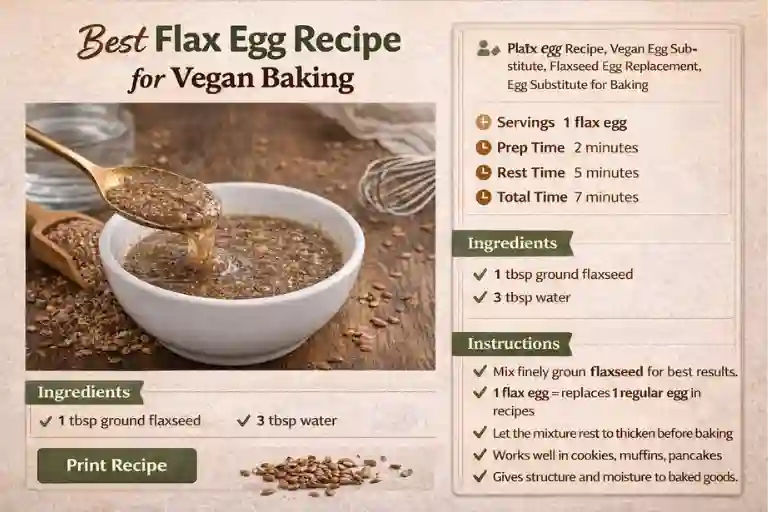
Recipe Card-Best Flax Egg Recipe for Vegan Baking
Course: Baking Ingredient / Egg SubstituteCuisine: Vegan / Plant-BasedDifficulty: Very Easy1
servings2
minutes2
minutes40
kcalIngredients
1 tablespoon ground flaxseed (flaxseed meal)
3 tablespoons water
Directions
- Measure the Flaxseed
Add 1 tablespoon of ground flaxseed to a small bowl. - Add Water
Pour 3 tablespoons of water into the bowl. This follows the standard flax egg ratio. - Mix Well
Stir the mixture thoroughly until the flaxseed and water combine evenly. - Let It Rest
Allow the mixture to sit for 5–10 minutes. The flaxseed will absorb the water and form a thick gel-like texture. - Use in Your Recipe
Once thickened, use the flax egg substitute in your recipe just like one regular egg when making cookies, muffins, pancakes, brownies, or quick breads. - Nutrition (Approximate per Flax Egg)
Calories: ~35
Fiber: ~2 grams
Omega-3 fatty acids: rich plant source
Protein: ~1 gram
This simple flax egg substitute is a convenient and nutritious egg substitute for baking in many plant-based recipes.
Recipe Video
Notes
- Always use ground flaxseed, not whole seeds, for a proper flaxseed egg replacement.
- If your recipe needs more eggs, simply multiply the flax egg ratio.
- This vegan egg replacement works best in dense baked goods rather than light or airy desserts.
Final Thoughts
A flax egg is one of the easiest and most reliable ways to replace eggs in baking. With just ground flaxseed and water, you can create a simple flax egg substitute that works well in many everyday recipes. This natural flaxseed egg replacement helps bind ingredients together while adding a small boost of fiber and plant-based nutrients.
Because it is quick to prepare and uses a simple flax egg ratio, this vegan egg replacement has become a favorite option for people who follow a plant-based diet, have egg allergies, or simply want a convenient egg substitute for baking.
From cookies and muffins to pancakes and brownies, a flax egg for baking can help you create delicious recipes without using traditional eggs. If you enjoy baking or experimenting with new ingredients, try using a flax egg substitute in your next recipe and see how easy egg-free baking can be.