
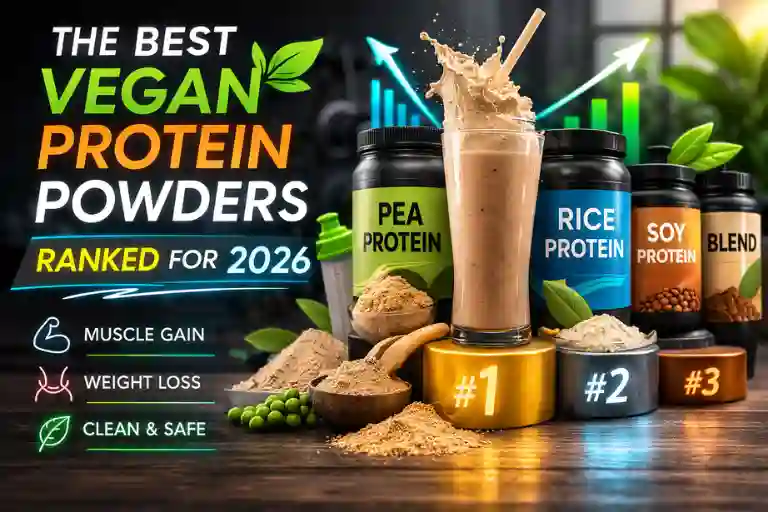
Finding the right vegan protein powders can feel overwhelming. With so many brands claiming to be the best vegan protein powder, it’s hard to know which one truly delivers results. Whether your goal is muscle gain, weight loss, better digestion, or simply adding more plant-based protein powder to your daily routine, the right choice matters.
Unlike whey, vegan protein supplements come from sources like pea protein, brown rice protein, soy, and hemp, each offering different benefits. Some are better for muscle building, while others are ideal for people with a sensitive stomach or those avoiding artificial sweeteners.
In this complete 2026 guide, we’ll break down the science, safety, cost, taste, and performance of the top options. By the end, you’ll confidently choose the best plant-based protein for your goals — without confusion or marketing hype.
Quick Answer
Vegan protein powder is a plant-based protein supplement made from sources like pea, brown rice, soy, or hemp. It is ideal for vegans, people with lactose intolerance, or anyone wanting a dairy-free protein option. Yes, it is effective for muscle gain when it provides a complete amino acid profile and enough daily protein intake.
Quick Comparison Table (2026 Picks)
Below is a quick comparison of top vegan protein powders based on protein quality, ingredient transparency, digestibility, and value per serving. This helps you quickly find the best vegan protein powder for your goal — whether it’s muscle gain, weight loss, or clean ingredients.
| Product | Protein per Scoop | Calories | Sweetener | Third-Party Tested | Best For | Price per Serving |
| Orgain Organic Plant Protein | 21g | 150 | Organic Stevia | Yes | Beginners & Smooth Taste | ~$1.25 |
| Garden of Life Sport Plant Protein | 30g | 160 | Stevia | Yes (NSF Certified) | Muscle Gain & Athletes | ~$1.90 |
| Vega Sport Premium Protein | 30g | 170 | Stevia | Yes | Post-Workout Recovery | ~$2.00 |
| Naked Pea Protein | 27g | 120 | None | Yes | No Artificial Sweeteners | ~$1.50 |
| Sunwarrior Warrior Blend | 21g | 100 | Monk Fruit | Yes | Sensitive Stomach | ~$1.80 |
Why This Table Matters
When comparing plant-based protein powders, always check:
- Protein per scoop (aim for 20–30g)
- Sweetener type (avoid artificial if sensitive)
- Third-party testing (important for heavy metals safety)
- Price per gram of protein
- Your personal goal — muscle building, weight loss, digestion, or clean ingredients
What Is Vegan Protein Powder?
You might also like: How to Make the Easy Vegan Pasta Brands Recipe
Definition
Vegan protein powder is a plant-based protein supplement made from non-dairy sources like pea, brown rice, soy, hemp, or seeds. It is designed to help people increase their daily protein intake without using animal products like whey or casein.
How It’s Made
Most plant-based protein powders are made by:
- Extracting protein from plants
- Removing most carbs and fats
- Drying the protein into powder form
- Sometimes blending different sources to improve the amino acid profile
Some products are simple isolates (like pea protein isolate), while others are multi-source blends for better protein quality.
Vegan vs Plant-Based – What’s the Difference?
- Vegan protein powder contains zero animal ingredients and fits a strict vegan lifestyle.
- Plant-based protein powder usually means it comes from plants, but it may not always be certified vegan.
In most supplement cases, the terms are used similarly — but label checking is important.
Why It Exists
Many people cannot tolerate whey due to lactose intolerance, bloating, or dairy sensitivity. Others choose vegan protein for:
- Ethical reasons
- Environmental concerns
- Digestive comfort
- Clean ingredient preference
That’s why the demand for the best plant-based protein continues to grow.
Who Benefits Most?
Vegan protein powders are ideal for:
- Vegans and vegetarians
- People with lactose intolerance
- Athletes needing dairy-free recovery
- Those with a sensitive stomach
- Anyone looking for a cleaner alternative to whey
When chosen correctly, they can support muscle gain, weight loss, and daily nutrition goals.
Types of Vegan Protein (Deep Ingredient Breakdown)
Understanding the different types helps you choose the best vegan protein powder for your needs.
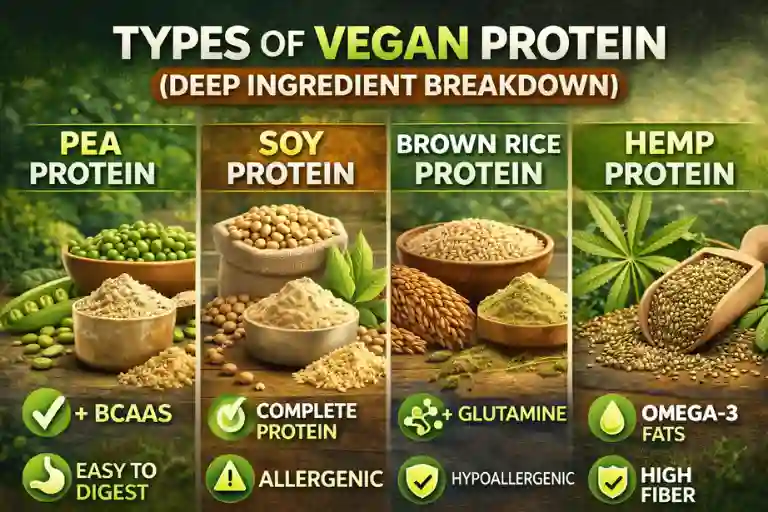
1️⃣ Pea Protein
Source: Yellow split peas
Amino Acid Profile
Rich in essential amino acids but slightly low in methionine.
Leucine Content
Moderate to high — good for triggering muscle protein synthesis.
Digestibility
Easy to digest and less likely to cause bloating.
Best Use Case
✔ Muscle gain
✔ Sensitive stomach
✔ Dairy-free athletes
Pea protein is one of the most popular bases in vegan protein supplements.
2️⃣ Brown Rice Protein
Source: Whole grain brown rice
Amino Acid Profile
Lower in lysine but pairs well with pea protein.
Leucine Content
Moderate.
Digestibility
Generally smooth but can feel slightly gritty.
Best Use Case
✔ Blending with pea protein
✔ Those avoiding soy
✔ Mild flavor preference
Often used in multi-source blends for a complete profile.
3️⃣ Soy Protein
Source: Soybeans
Amino Acid Profile
Complete protein with all essential amino acids.
Leucine Content
High — similar to whey.
Digestibility
Highly digestible but may cause concern for those sensitive to soy.
Best Use Case
✔ Muscle building
✔ Complete protein needs
✔ Budget-friendly option
Soy protein is scientifically strong but not preferred by everyone.
4️⃣ Hemp Protein
Source: Hemp seeds
Amino Acid Profile
Contains essential amino acids but lower total protein concentration.
Leucine Content
Lower compared to pea or soy.
Digestibility
Very easy to digest and contains fiber.
Best Use Case
✔ General health
✔ Smoothies
✔ Those prioritizing omega-3 content
Not ideal alone for serious muscle gain, but good for overall wellness.
5️⃣ Pumpkin Seed Protein
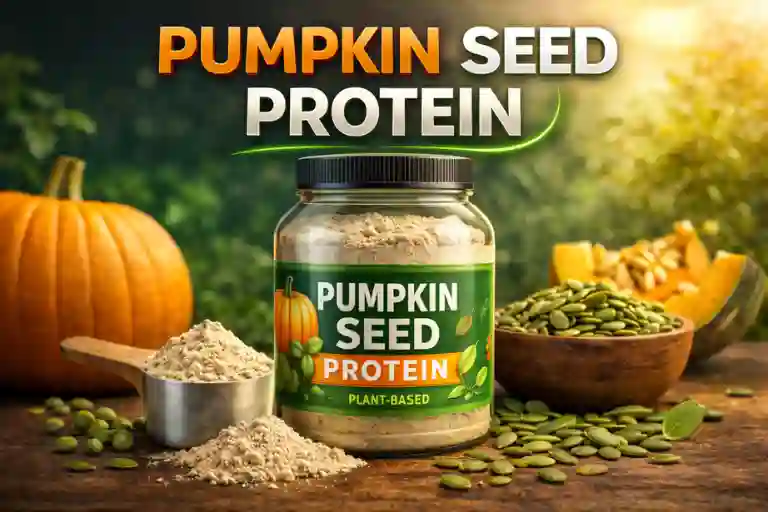
Source: Pumpkin seeds
Amino Acid Profile
Rich in certain amino acids but not fully complete alone.
Leucine Content
Moderate.
Digestibility
Gentle on the stomach.
Best Use Case
✔ Allergy-friendly option
✔ Rotating protein sources
✔ Clean-label formulas
Still underrated in many plant-based protein powders.
6️⃣ Multi-Source Blends
This is where many of the best vegan protein powders stand out.
They combine:
- Pea + brown rice
- Pea + pumpkin seed
- Pea + hemp
Amino Acid Profile
Balanced and more complete.
Leucine Content
Improved compared to single-source protein.
Digestibility
Usually better, especially with enzyme blends.
Best Use Case
✔ Muscle gain
✔ Daily protein support
✔ Balanced nutrition
Blends help solve the incomplete amino acid issue and are often the smartest choice.
Protein Quality Science
Most articles talk about “high protein” but ignore protein quality. This is what truly determines whether a vegan protein powder supports muscle gain and recovery.
Complete vs Incomplete Protein
A complete protein contains all 9 essential amino acids your body cannot produce.
- Soy protein is complete.
- Pea protein is slightly low in methionine.
- Brown rice protein is low in lysine.
That’s why many of the best plant-based protein powders use multi-source blends like pea + rice. Together, they create a balanced amino acid profile.
DIAAS vs PDCAAS Explained
These are scoring systems that measure protein quality and digestibility.
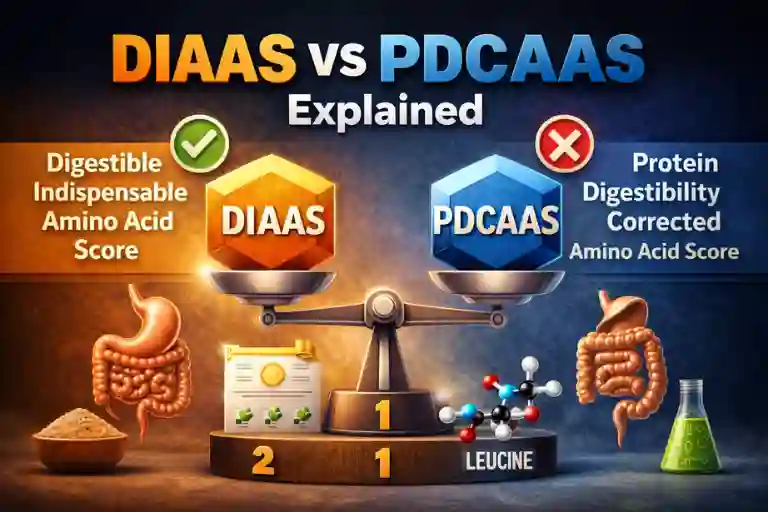
- PDCAAS (older method) scores proteins from 0–1.
- DIAAS (newer method) gives a more accurate absorption score.
Whey usually scores slightly higher, but well-formulated vegan protein supplements can come very close — especially blends.
Leucine Threshold for Muscle Protein Synthesis
Leucine is the key amino acid that triggers muscle protein synthesis.
To stimulate muscle growth, you need about 2–3 grams of leucine per serving.
High-quality vegan protein powders (30g serving) usually meet this threshold — especially pea or soy-based options.
Bioavailability vs Whey
Bioavailability means how well your body absorbs and uses protein.
- Whey absorbs slightly faster.
- Plant protein absorbs steadily.
The difference is small when total daily protein intake is adequate.
Absorption Speed Comparison
| Protein Type | Absorption Speed | Best For |
| Whey Isolate | Fast | Quick recovery |
| Pea Protein | Moderate | Muscle gain |
| Soy Protein | Moderate-Fast | Complete amino support |
| Blends | Balanced | Daily nutrition |
For most people, absorption speed is less important than total protein intake and amino acid balance.
Vegan Protein vs Whey Protein
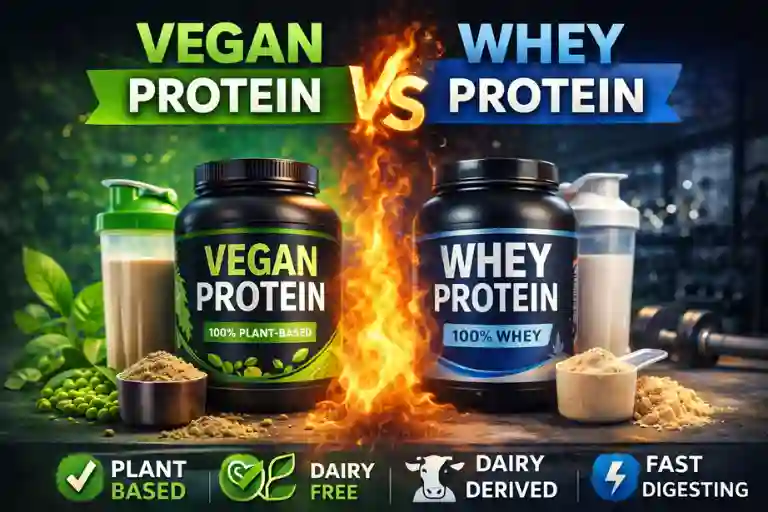
This is one of the most searched comparisons:
“Vegan protein vs whey protein – which is better?”
Here’s a simple breakdown:
| Factor | Vegan Protein Powder | Whey Protein |
| Muscle Growth Effectiveness | Strong (if complete & enough leucine) | Slightly higher leucine naturally |
| Digestibility | Good (varies by type) | Very high |
| Bloating Risk | Low–Moderate | Higher for lactose-sensitive |
| Hormonal Impact | Dairy-free, neutral | Contains dairy hormones |
| Lactose Issues | Safe for lactose intolerance | May cause discomfort |
| Sustainability | Lower carbon footprint | Higher environmental impact |
| Cost per Gram of Protein | Moderate | Often slightly cheaper |
“Is Vegan Protein Weaker?”
Short answer: No.
When you consume enough total protein (20–30g per serving) and meet the leucine threshold, vegan protein powder can build muscle just as effectively as whey.
The key is choosing:
- A complete amino acid blend
- A product with strong digestibility
- Adequate daily protein intake
Muscle growth depends more on total intake and training — not just protein type.
How We Ranked These Protein Powders
Unlike many “top 10” lists, our rankings are not random. We used clear criteria to evaluate each vegan protein supplement.
1️⃣ Protein Quality Score
We evaluated:
- Amino acid completeness
- Leucine content
- Protein per scoop (20–30g ideal)
Blends score higher than single incomplete sources.
2️⃣ Ingredient Transparency
We checked for:
- Artificial sweeteners
- Added fillers
- Gum thickeners
- Unnecessary additives
Cleaner labels ranked higher.
3️⃣ Third-Party Certification
Important for safety and heavy metal concerns.
We prioritized brands that are:
- NSF Certified
- Informed Sport Certified
- Third-party lab tested
4️⃣ Digestibility Rating
We considered:
- Bloating risk
- Enzyme blends
- Fiber content
- User feedback
Proteins suitable for a sensitive stomach ranked higher.
5️⃣ Value per Gram of Protein
Instead of just price per tub, we calculated:
- Cost per serving
- Cost per gram of protein
This reveals the true value.
6️⃣ Taste & Mixability Score
We evaluated:
- Smoothness
- Chalkiness
- Grittiness
- Mixability in water
- Mixability in smoothies
Because even the best plant-based protein powder must taste good to stay consistent.
Top Vegan Protein Powders
Below are some of the best vegan protein powders in 2026, ranked based on protein quality, digestibility, safety testing, taste, and value per gram.
🥇 1. Garden of Life Sport Plant-Based Protein

Quick Summary
A high-protein, athlete-focused plant-based protein powder with strong third-party certification and excellent amino acid balance.
Pros
- 30g protein per scoop
- NSF Certified for Sport
- Complete amino acid profile
- Good leucine content
- No artificial sweeteners
Cons
- Slightly higher price
- Texture can be thick
Best For
✔ Muscle gain
✔ Athletes
✔ Post-workout recovery
Taste Score: 8/10
Mixability Score: 8/10
Value Score: 7.5/10
🥈 2. Vega Sport Premium Protein
Quick Summary
A powerful vegan protein supplement designed for performance and recovery.
Pros
- 30g protein
- Includes BCAAs
- Good recovery support
- Trusted brand
Cons
- Slightly sweet for some
- Premium pricing
Best For
✔ High-intensity training
✔ Athletes
✔ Recovery support
Taste Score: 8.5/10
Mixability Score: 8/10
Value Score: 7/10
🥉 3. Orgain Organic Plant Protein
Quick Summary
A balanced and smooth organic vegan protein powder ideal for beginners.
Pros
- USDA Organic
- Smooth texture
- Affordable
- Clean ingredient list
Cons
- Lower protein per scoop (21g)
- Not ideal for aggressive bulking
Best For
✔ Daily nutrition
✔ Weight loss
✔ Smooth shakes
Taste Score: 9/10
Mixability Score: 9/10
Value Score: 8.5/10
4. Naked Pea Protein
Quick Summary
A minimalist pea protein isolate with zero sweeteners or additives.
Pros
- No artificial sweeteners
- Only one ingredient
- Third-party tested
- High protein per serving
Cons
- Plain taste
- Slightly gritty in water
Best For
✔ Clean-label users
✔ Sensitive stomach
✔ DIY smoothies
Taste Score: 6.5/10
Mixability Score: 7/10
Value Score: 8/10
5. Sunwarrior Warrior Blend
Quick Summary
A multi-source blend combining pea, hemp, and goji for balanced amino acids.
Pros
- Good amino acid blend
- Easy digestion
- Smooth texture
Cons
- Slightly lower protein concentration
- Premium price
Best For
✔ Daily use
✔ Sensitive digestion
✔ Balanced nutrition
Taste Score: 8/10
Mixability Score: 8.5/10
Value Score: 7.5/10
Goal-Based Recommendations
Choosing the best plant-based protein powder depends on your goal.
💪 Best for Muscle Gain
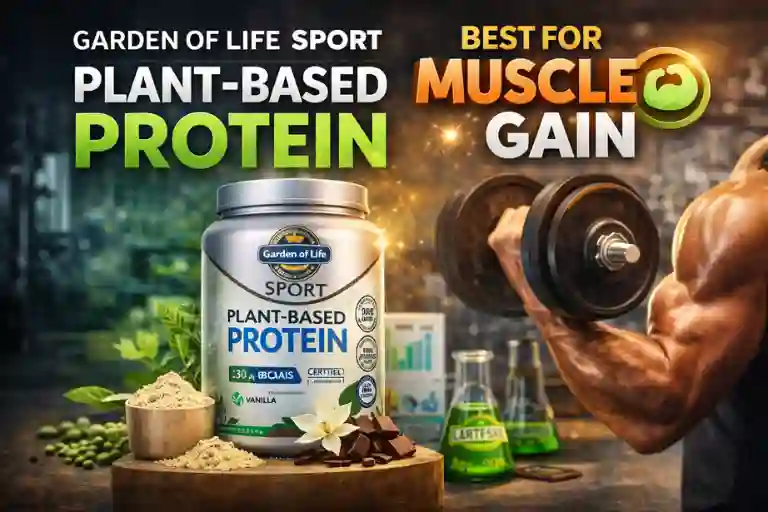
Top Pick: Garden of Life Sport
Why?
- 30g protein per scoop
- Strong leucine content
- Complete amino acid profile
For serious muscle building, aim for 25–30g protein per serving.
🔥 Best for Weight Loss
Top Pick: Orgain Organic Plant Protein
Why?
- Moderate calories
- Smooth texture
- Supports satiety
Ideal for meal replacement shakes during calorie deficit.
👩 Best for Women
Top Pick: Vega Sport
Why?
- Clean ingredient profile
- Strong recovery support
- Balanced amino acids
Works well for strength training and active lifestyles.
🏋️ Best for Athletes
Top Pick: Garden of Life Sport (NSF Certified)
Why?
- Third-party tested
- High protein per scoop
- Safe for competitive sports
🌿 Best for Sensitive Stomach
Top Pick: Naked Pea Protein
Why?
- No artificial sweeteners
- Simple ingredient list
- Low bloating risk
🌱 Best Organic Option
Top Pick: Orgain Organic Plant Protein
Why?
- USDA Organic
- No synthetic additives
- Balanced protein blend
💰 Best Budget Option
Top Pick: Naked Pea Protein
Why?
- Strong protein per dollar ratio
- Minimal marketing markup
- High value per gram
Heavy Metals & Safety Transparency
Many people search for the best vegan protein powder, but few ask an important question: Is it safe?
Because plant-based protein powders come from soil-grown ingredients (peas, rice, hemp), they can sometimes contain trace amounts of heavy metals like lead, cadmium, or arsenic. This doesn’t mean all products are unsafe — but quality control matters.
Why Heavy Metals Are a Concern
Plants naturally absorb minerals from soil. If the soil contains contaminants, small traces may appear in protein powder.
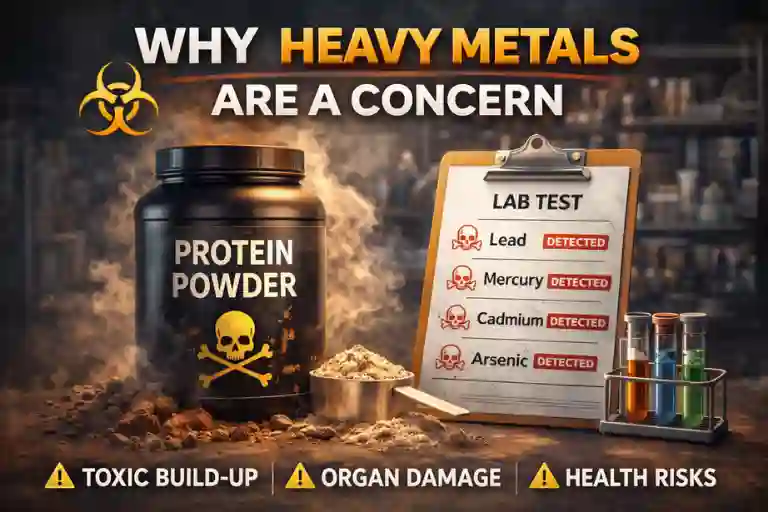
Reputable brands reduce this risk by:
- Testing raw materials
- Filtering during processing
- Using clean sourcing methods
- Publishing third-party lab reports
The best vegan protein powders are transparent about testing.
How to Check for Lab Testing
Before buying, check:
- Does the brand mention third-party testing?
- Do they publish lab results?
- Do they carry certifications?
Avoid products that do not mention safety testing at all.
NSF Certified
If a product is NSF Certified, it means:
- Ingredients are verified
- Labels are accurate
- Tested for contaminants
- Safe for athletes
This is especially important for competitive sports.
Informed Sport Certification
Informed Sport Certified products are tested for banned substances. If you are an athlete, this certification adds another layer of trust.
Non-GMO & Organic Considerations
- Non-GMO ensures no genetically modified ingredients.
- Organic vegan protein powder means ingredients were grown without synthetic pesticides.
While organic does not automatically mean “higher protein quality,” it may reduce exposure to unwanted chemicals. Choosing a third-party tested vegan protein supplement gives you peace of mind.
Digestive Issues & Bloating Guide
One common complaint about vegan protein powder is bloating. Let’s understand why this happens — and how to fix it.
Why Vegan Protein Causes Bloating
Some plant proteins contain:
- Natural fiber
- Resistant starch
- Fermentable carbs
For sensitive individuals, this may cause gas or mild discomfort.
Fiber Overload Explained
Unlike whey, many plant-based protein powders include extra fiber.
Too much fiber at once can:
- Slow digestion
- Increase gas
- Cause temporary bloating
Start with half a scoop if you’re new to plant protein.
Enzyme Blends Help
Some high-quality vegan protein supplements include digestive enzymes.
These help:
- Break down protein faster
- Improve absorption
- Reduce stomach discomfort
Look for products that mention added enzymes if digestion is a concern.
Best Proteins for IBS or Sensitive Stomach

Generally easier to digest:
✔ Pea protein isolate
✔ Simple single-ingredient formulas
✔ Low-fiber blends
Avoid:
- Artificial sweeteners
- Sugar alcohols
- Excess gums
How to Reduce Discomfort
- Start with smaller servings
- Drink more water
- Blend with smoothies instead of water
- Choose a clean-label product
Most people adjust within a few days.
Cost Analysis & Value Strategy
Many buyers only look at the tub price. But smart shoppers calculate real value.
Cost per Serving
Check:
- Total servings per container
- Total price
Example:
$40 tub with 20 servings = $2 per serving.
Cost per Gram of Protein
This is more accurate.
If one serving gives:
- 25g protein
- Costs $2
Then cost per gram = $2 ÷ 25 = $0.08 per gram.
This helps compare brands fairly.
Isolate vs Blend Cost Differences
- Isolates (like pure pea protein isolate) are usually cheaper.
- Multi-source blends cost more but offer better amino acid balance.
Sometimes paying slightly more gives better protein quality.
Budget Buying Strategy
To save money:
- Buy larger containers
- Compare cost per gram
- Avoid overpaying for branding
- Choose simple formulas
Often, minimalist options like single-source vegan protein powder provide excellent value.
When Premium Protein Is Worth It
Premium products are worth it if:
✔ You’re an athlete
✔ You need third-party certification
✔ You want organic ingredients
✔ You have digestion issues
Otherwise, a mid-range, clean-label option works perfectly.
Taste & Mixability Matrix
No matter how strong the amino acid profile is, a vegan protein powder must taste good. If it’s too gritty or hard to mix, consistency becomes difficult.
Here’s a simple breakdown:
| Protein Type | Smoothness | Grittiness Factor | Best for Smoothies | Best with Water | Best for Baking |
| Pea Protein | Medium | Slightly grainy | ✔✔✔ | ✔✔ | ✔✔ |
| Brown Rice Protein | Medium | Slight grit | ✔✔✔ | ✔ | ✔✔✔ |
| Soy Protein | Smooth | Low | ✔✔✔ | ✔✔✔ | ✔✔ |
| Hemp Protein | Thick | Noticeable texture | ✔✔✔ | ✖ | ✔✔ |
| Multi-Source Blends | Smoothest | Low | ✔✔✔✔ | ✔✔✔ | ✔✔✔ |
Smoothness Comparison
The smoothest options are usually:
- Soy protein
- High-quality multi-source plant-based protein powders
Single-source proteins like rice or hemp may feel slightly grainy.
Grittiness Factor
Grittiness often depends on:
- Processing quality
- Particle size
- Presence of fiber
Premium vegan protein supplements use finer filtration for better texture.
Best for Smoothies
If you blend with fruits and nut butter, almost any protein works.
Best choices:
✔ Multi-source blends
✔ Pea protein
✔ Hemp protein
Smoothies naturally reduce texture issues.
Best with Water
If you mix only with water, choose:
✔ Soy protein
✔ Well-processed blends
Avoid gritty single-ingredient rice protein unless finely milled.
Best for Baking
For protein pancakes or muffins:
✔ Brown rice protein
✔ Pea protein
✔ Multi-source blends
These hold structure better during cooking.
Timing & Usage Strategy
Many guides focus only on “which protein.” But timing matters too.
Pre-Workout vs Post-Workout
- Pre-workout: Light serving (15–20g) 30–60 minutes before training.
- Post-workout: 20–30g within 1–2 hours to support muscle protein synthesis.
For most people, total daily protein matters more than exact timing.
During Calorie Deficit
When cutting weight, vegan protein powder for weight loss helps:
- Preserve muscle
- Increase fullness
- Control hunger
Choose lower-calorie options with 20–25g protein.
As a Meal Replacement
You can use plant-based protein powder as a meal base by adding:
- Oats
- Nut butter
- Seeds
- Fruits
This works well for busy mornings.
Before Bed
Unlike whey, plant protein digests at a moderate pace.
A 20g serving before bed may support overnight recovery.
How Many Scoops Per Day?
This depends on total protein needs.
General guideline:
- Active individuals: 1–2 scoops daily
- Athletes: Adjust based on body weight
- Aim for 0.7–1g protein per pound of body weight
Protein powder supplements your diet — it does not replace whole foods.
Advanced Protein Stacking Strategy
This is where you move beyond basic supplementation.
Combine Pea + Rice for Full Amino Profile
Pea protein is lower in methionine.
Brown rice protein is lower in lysine.
Together, they form a more complete protein blend — similar to whey in amino acid balance.
This is why many of the best vegan protein powders use blends.
Add Creatine for Muscle Gain
For serious muscle building, combine:
✔ Vegan protein
✔ 3–5g creatine monohydrate daily
Creatine improves strength and power output.
Add Digestive Enzymes
If you experience bloating:
- Choose a protein with added enzymes
- Or supplement separately
This improves comfort and nutrient absorption.
Stack for Bulking vs Cutting
Bulking Stack:
- Vegan protein
- Creatine
- Carbohydrates (rice, oats)
Cutting Stack:
- Vegan protein
- Fiber-rich foods
- Calorie control
Adjust based on goal.
Vegan Protein + Carb Timing
After workouts, combining vegan protein powder + carbohydrates can:
- Improve recovery
- Restore glycogen
- Support muscle growth
Sustainability & Environmental Impact
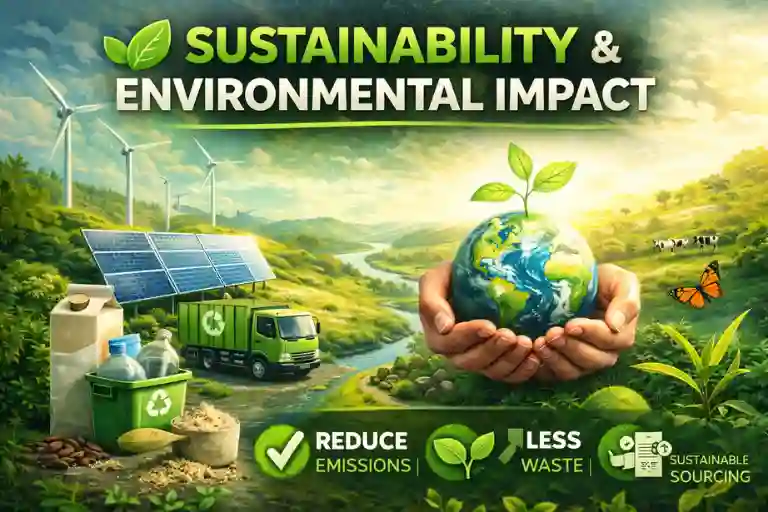
More people are choosing vegan protein powders not just for health, but also for the planet. Let’s look at the environmental side in simple terms.
Water Usage Comparison
Animal-based protein (like whey) requires:
- Raising cows
- Growing feed crops
- Large water resources
In contrast, most plant-based protein powders require significantly less water to produce.
Pea protein and pumpkin seed protein generally have lower water demands compared to dairy-based whey.
This makes vegan protein supplements more resource-efficient.
Carbon Footprint vs Whey
Whey protein is a dairy byproduct, and dairy farming contributes to:
- Methane emissions
- High greenhouse gas output
- Land usage
Plant-based protein powder production typically produces:
✔ Lower carbon emissions
✔ Less land use
✔ Reduced environmental strain
If sustainability is a priority, vegan protein clearly has the edge.
Soy vs Pea Environmental Differences
Not all plant proteins are equal environmentally.
- Pea protein often has a lower environmental footprint.
- Soy protein can be sustainable, but sourcing matters. Some soy farming contributes to deforestation.
That’s why checking ethical sourcing practices is important.
Ethical Sourcing
Look for brands that mention:
- Sustainable farming
- Non-deforestation policies
- Fair labor practices
- Organic or regenerative agriculture
The best vegan protein powder is not only good for your body — but also responsibly sourced.
Common Buyer Mistakes
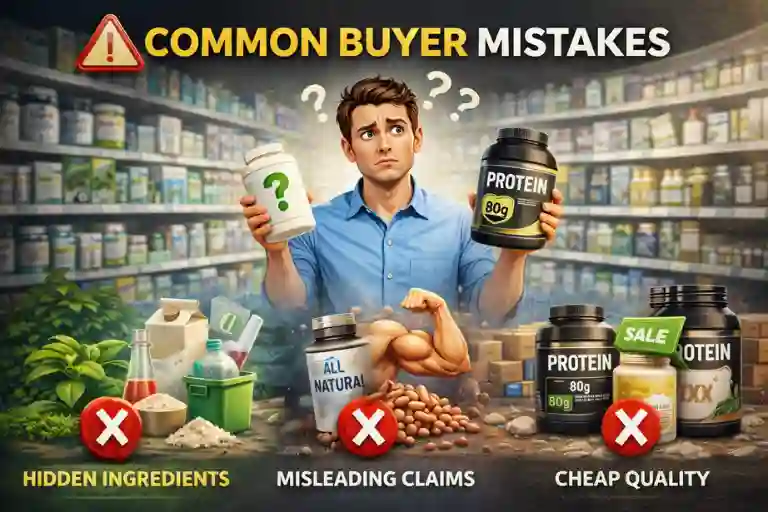
Choosing the wrong vegan protein supplement can waste money and reduce results. Avoid these mistakes.
❌ Choosing the Lowest Protein Percentage
Some products look cheap but contain:
- Only 15–18g protein per scoop
- Extra fillers
- Added sugars
Always aim for 20–30g protein per serving.
❌ Ignoring Leucine Content
Protein alone is not enough.
For muscle gain, your protein should provide enough leucine (around 2–3g per serving) to trigger muscle protein synthesis.
Blends usually perform better than single incomplete sources.
❌ Ignoring Third-Party Testing
Safety matters.
If a brand does not mention:
- NSF Certified
- Informed Sport Certified
- Third-party lab testing
You may be taking a risk. Transparency is a sign of quality.
❌ Overpaying for Branding
Marketing does not equal better protein.
Always compare:
- Cost per gram of protein
- Ingredient list
- Certification
A minimalist pea protein isolate can sometimes outperform flashy premium packaging.
❌ Choosing a Single Incomplete Protein
Brown rice protein alone is incomplete.
Pea protein alone may lack certain amino acids. That’s why multi-source plant-based protein powders often deliver better amino acid balance.
FAQs About Protein Powders
Is vegan protein a complete protein?
Some vegan protein powders are complete, while others are not. Soy protein is naturally complete. Many modern plant-based protein powders use pea + rice blends to create a full essential amino acid profile. Always check the label to ensure it supports muscle growth and recovery needs.
Does vegan protein build muscle as effectively as whey?
Yes, vegan protein powder can build muscle as effectively as whey when it provides enough total protein and meets the leucine threshold (about 2–3g per serving). Muscle growth depends more on overall daily protein intake and training consistency than protein source alone.
Which vegan protein is easiest to digest?
Pea protein isolate and simple multi-source blends are usually the easiest to digest. They tend to cause less bloating compared to high-fiber or heavily sweetened formulas. If you have a sensitive stomach, choose a clean-label vegan protein supplement without artificial sweeteners.
Is vegan protein healthier than whey?
It depends on your needs. Vegan protein powders are dairy-free, lactose-free, and often more sustainable. Whey absorbs slightly faster but may cause digestive discomfort for some people. Both can support health when high-quality ingredients and proper daily protein intake are maintained.
Can vegan protein cause bloating?
Yes, some plant-based protein powders can cause mild bloating due to fiber or fermentable carbs. Choosing a low-fiber formula, starting with smaller servings, and selecting products with digestive enzymes can help reduce discomfort. Most people adjust after regular use.
How much vegan protein should I take daily?
Daily intake depends on your body weight and activity level. A general guideline is 0.7–1 gram of protein per pound of body weight. Most people use 1–2 scoops of vegan protein powder per day to meet their total protein needs alongside whole foods.
Final Decision Framework — Choose the Right Vegan Protein Powder with Confidence
By now, you understand the science, safety, cost, taste, and performance of different vegan protein powders. Let’s simplify everything into a clear action plan.
Use this checklist before you buy:
✔ Your Goal
- Muscle Gain: Choose a blend with 20–30g protein per scoop and strong leucine content.
- Weight Loss: Pick a moderate-calorie option that supports fullness.
- Daily Nutrition: A balanced plant-based protein powder works well.
Your goal determines protein amount and formula type.
✔ Your Digestion Tolerance
- Sensitive stomach? Choose pea protein isolate or clean multi-source blends.
- Avoid artificial sweeteners and excess gums.
- Consider formulas with digestive enzymes if bloating occurs.
Comfort matters for consistency.
✔ Your Budget
Do not judge by tub price alone.
- Compare cost per gram of protein
- Look at servings per container
- Avoid overpaying for branding
Sometimes a simple vegan protein supplement offers the best value.
✔ Your Taste Preference
If you mix with water, choose smoother blends.
If you blend smoothies, texture matters less.
If baking, choose stable proteins like pea or rice.
The best vegan protein powder is one you’ll actually enjoy drinking.
✔ Certification Needs
If safety and quality matter to you, check for:
- Third-party lab testing
- NSF Certified
- Informed Sport Certified
Transparency signals trust.
✔ Sustainability Preference
If environmental impact is important:
- Choose brands with ethical sourcing
- Look for organic or non-GMO options
- Consider lower-footprint proteins like pea
Clear Actionable Summary
The perfect vegan protein powder is not the most advertised one — it’s the one that matches:
- Your fitness goal
- Your digestion comfort
- Your budget
- Your taste preference
- Your safety standards
- Your values
When these factors align, you’ll make a smart, confident choice — and get real results without confusion or hype.