
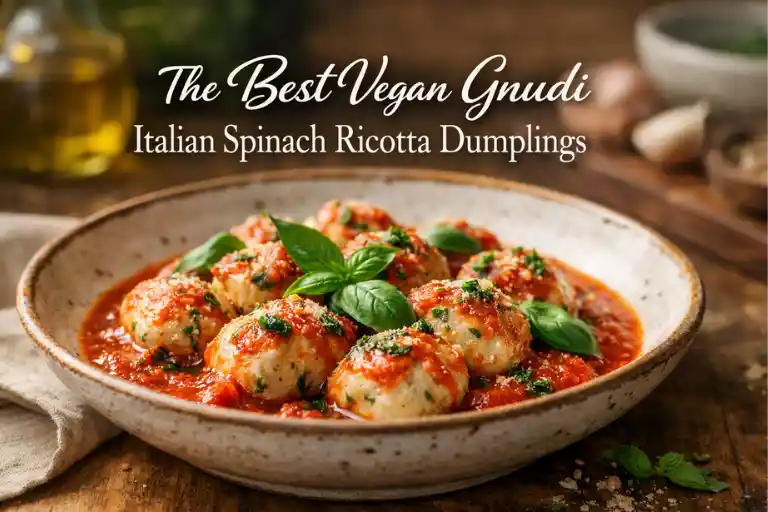
If you love Italian Spinach comfort food but want a dairy-free option, this vegan gnudi recipe will surprise you. Traditional gnudi are soft spinach and ricotta dumplings from Tuscany. They are light, tender, and usually made with fresh ricotta. In this version, we create the same pillowy texture using a smart vegan ricotta substitute like tofu or cashew ricotta.
This guide will show you how to make vegan gnudi from scratch, step by step, so they stay firm and don’t fall apart. You’ll also learn the secrets behind vegan spinach Italian Spinach Ricotta Dumplings, the best flour for structure, and simple sauce pairings like classic marinara. Whether you are looking for dairy-free spinach dumplings, a gluten-free vegan gnudi recipe, or just an authentic Italian meal without cheese, this foolproof method makes it easy and delicious.
What Is Gnudi? (And How It’s Different from Gnocchi)
The word “gnudi” means “naked” in Italian. It comes from the idea of naked ravioli — the soft ricotta filling served without pasta around it. In simple words, gnudi are Italian spinach and ricotta dumplings without the wrapper.
Tuscan Origins
Gnudi come from Tuscany, a region known for simple, rustic dishes. Traditional Tuscan gnudi are made with fresh ricotta, spinach, a little flour, nutmeg, and salt. They are gently boiled and served with light sauces like marinara sauce or sage butter.
Traditional Ricotta Structure
Classic gnudi rely on dairy ricotta for structure. Ricotta contains natural protein that helps bind the mixture. This is why traditional spinach and ricotta gnudi hold together even though they are soft.
Gnudi vs Gnocchi – What’s the Difference?
| Feature | Gnudi | Gnocchi |
| Main Base | Ricotta + spinach | Potato |
| Texture | Soft & pillowy | Slightly chewy |
| Origin | Tuscany | Northern Italy |
| Density | Light | More firm |
| Flavor | Creamy, delicate | Earthy, starchy |
While gnocchi are made mainly from potatoes, gnudi dumplings are lighter and creamier because of the ricotta base.
Why Vegan Gnudi Requires Technique
When making vegan gnudi, you don’t have dairy protein to naturally bind the mixture. Using tofu ricotta gnudi or cashew ricotta dumplings changes the moisture balance. This is why learning how to keep vegan gnudi from falling apart is important. The right flour, proper draining, and chill time make all the difference.
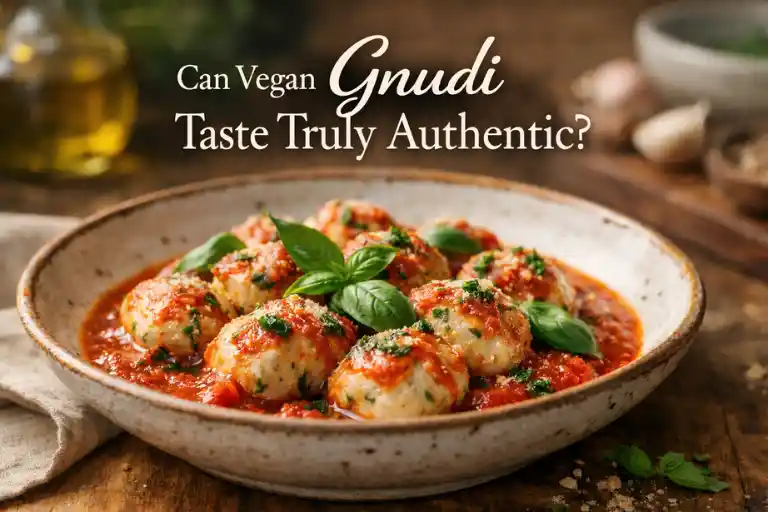
Can Vegan Gnudi Taste Truly Authentic?
Many people ask, “Can vegan gnudi really taste like the traditional Italian version?” The answer is yes — if you focus on balance and technique.
You might also like: Korean Vegetable Pancakes Yachaejeon Recipe
Flavor Replication Strategy
To create authentic flavor in a vegan spinach ricotta gnudi recipe, you need:
- Fresh spinach
- Nutmeg (just a pinch)
- Good olive oil
- Lemon zest for brightness
- Proper seasoning
Using a well-seasoned vegan ricotta substitute like tofu or cashew ricotta helps recreate that creamy base.
Texture Expectations
Traditional gnudi are soft but not mushy. When learning how to make vegan gnudi from scratch, your goal is light and pillowy, not dense or rubbery. Too much flour makes them heavy. Too little makes them fall apart. Balance is key.
🇮🇹 Preserving the Italian Essence
Authentic Italian vegan gnudi dumplings should feel simple and rustic. Avoid overcomplicating the recipe. Stick to classic sauces like vegan marinara gnudi or sage butter style sauces. Keep the focus on clean flavors.
What Most Vegan Recipes Get Wrong
Many recipes skip:
- Removing excess spinach moisture
- Testing one dumpling first
- Using enough binder
- Letting the mixture rest
This is why some vegan gnudi recipes fall apart. When you control moisture and structure, you get a foolproof vegan gnudi recipe that tastes just as comforting as the traditional version.
Why Traditional Gnudi Are Difficult to Veganize
Making vegan gnudi is not just about removing dairy. The real challenge is structure. Traditional spinach and ricotta gnudi depend on the natural strength of dairy protein.
Protein Structure of Dairy Ricotta
Classic ricotta contains casein protein, which helps bind the mixture. When heated, this protein firms up gently, keeping the dumplings soft but stable. That is why traditional Italian gnudi dumplings rarely fall apart when cooked properly.
The Moisture Imbalance Problem
Plant-based ricotta substitutes — like tofu or cashew ricotta — contain different moisture levels. Spinach also holds a lot of water. If you don’t remove enough liquid, your vegan spinach ricotta gnudi will become too wet and fragile.
Why Vegan Gnudi Often Fall Apart
Most failed vegan gnudi recipes have one of these issues:
- Too much moisture
- Not enough binder
- Skipping chill time
- Boiling too aggressively
This is why many people search for how to keep vegan gnudi from falling apart.
Structural Solution Overview
The solution is balance:
- Drain spinach very well
- Choose a high-protein vegan ricotta substitute
- Use the right flour as a binder
- Chill before boiling
- Test one dumpling first
When these steps are followed, your vegan gnudi recipe becomes firm, light, and reliable.
The Best Vegan Ricotta Options for Gnudi
Not all plant-based ricotta works the same way. The texture and structure strength will affect your final dumplings.
Comparison Chart
| Option | Texture | Flavor | Structure Strength |
| Tofu Ricotta | Slightly firm | Mild, neutral | Strong |
| Cashew Ricotta | Creamy & smooth | Rich & buttery | Medium |
| Almond Ricotta | Light & soft | Slightly sweet | Moderate |
| Store-Bought Vegan Ricotta | Varies by brand | Balanced | Depends |
| Nut-Free & Soy-Free Options | Depends on base | Mild | Lower |
Tofu Ricotta (High Protein, Firm)
This is the most reliable option for tofu ricotta gnudi. It contains more protein, which improves binding. If you want a foolproof vegan gnudi recipe, tofu is often the best choice.
Cashew Ricotta (Creamier)
Great for flavor and creaminess. However, it can be softer. You may need slightly more flour to stabilize cashew ricotta dumplings.
Almond Ricotta
Light and mild in flavor. It works well, but structure may be weaker compared to tofu.
Store-Bought Vegan Ricotta
Some brands are watery, while others are firm. Always check texture before using in your vegan spinach ricotta gnudi recipe.
Nut-Free & Soy-Free Alternatives
Options like sunflower seed ricotta can work, but they usually require extra binder. Adjust flour carefully when making dairy-free spinach dumplings.
Ingredient Spotlight (Quality Makes the Difference)
Small details can transform your vegan gnudi recipe from average to authentic.
Fresh vs Frozen Spinach
- Fresh spinach gives better texture and lighter flavor.
- Frozen spinach works well but must be fully thawed and drained.
Both are fine for vegan Italian dumplings, but moisture control is key.
Why Squeezing Spinach Is Critical
Spinach holds a lot of water. If you skip this step, your dumplings may break. Always squeeze it in a clean towel until almost dry. This step directly prevents vegan gnudi falling apart.
Best Flour for Vegan Gnudi
Choosing the right binder matters.
- All-Purpose Flour (AP) – Easy, reliable
- Semolina – Slightly firmer texture
- Chickpea Flour – High-protein, gluten-free option
- Gluten-Free Blend – Works but may need adjustment
If you’re making a gluten-free vegan gnudi recipe, chickpea flour offers better structure than many blends.
Nutmeg & Lemon Zest Authenticity Tip
Traditional Tuscan gnudi often include a tiny pinch of nutmeg. Adding a little lemon zest brightens the flavor and helps mimic classic ricotta richness in your vegan spinach ricotta gnudi.
Salt Layering Technique
Season:
- The spinach
- The ricotta mixture
- The cooking water
Layered seasoning makes your Italian vegan gnudi dumplings taste balanced and authentic — not bland.
Ingredients You’ll Need
To make this vegan gnudi recipe, you only need simple ingredients. The key is balance — especially moisture and protein.
For the Gnudi Mixture
- 2 cups fresh spinach (or 1 cup frozen, fully drained)
- 1 cup vegan ricotta substitute (tofu ricotta or cashew ricotta)
- 3–5 tablespoons all-purpose flour (or chickpea flour for gluten-free vegan gnudi)
- 2 tablespoons nutritional yeast (optional, for cheesy flavor)
- ¼ teaspoon nutmeg
- Zest of ½ lemon
- Salt and black pepper to taste
For Serving
- Warm marinara sauce for gnudi or vegan sage butter
- Extra olive oil
- Fresh basil
These ingredients create soft yet stable vegan spinach ricotta gnudi that taste close to traditional Italian spinach and ricotta dumplings.
Step-by-Step Vegan Gnudi Recipe (With Texture Notes)
Follow these steps carefully to make vegan gnudi that don’t fall apart.
Prepare Spinach Correctly
If using fresh spinach, sauté it lightly until wilted. Do not overcook. Overcooked spinach releases too much water, which affects the texture of your dairy-free spinach dumplings.
If using frozen spinach, thaw it fully before moving to the next step.
Remove Excess Moisture
This is the most important step.
Place the spinach in a clean towel and squeeze firmly. Remove as much liquid as possible. Wet spinach is the main reason vegan gnudi fall apart. The mixture should feel dry, not soggy.
Make Vegan Ricotta
For tofu ricotta gnudi, crumble firm tofu and blend lightly with nutritional yeast, lemon zest, and salt. For cashew ricotta dumplings, blend soaked cashews until smooth but thick. The ricotta should be creamy but not watery. Thick texture equals stronger structure.
Combine & Adjust Texture
Mix spinach, vegan ricotta, flour, nutmeg, and seasoning gently.
Texture check:
- If too sticky → add 1 tablespoon flour
- If too dry → add 1 teaspoon olive oil
You want a soft mixture that holds shape when rolled. This balance makes your vegan spinach ricotta gnudi recipe foolproof.
Chill for Stability
Cover and refrigerate for at least 30 minutes.
Chilling allows flour to hydrate and improves binding. This step helps solve the common problem of how to keep vegan gnudi firm.
Shape Dumplings
Lightly flour your hands. Scoop about 1 tablespoon of mixture and roll gently into oval shapes.
Do not press too hard. Over-handling makes dumplings dense instead of light and pillowy.
Perform Boil Test
Before cooking the whole batch, test one dumpling first. This protects your entire vegan gnudi recipe from breaking.
The Boil Test Method (Chef Trick Most Blogs Skip)
This is the major competitive edge that makes your recipe reliable.
Test 1 Dumpling First
Bring a pot of salted water to a gentle simmer. Drop in one dumpling only.
If it:
- Holds shape → perfect
- Starts breaking → mixture needs more flour
This step prevents disappointment and ensures your Italian vegan gnudi dumplings cook perfectly.
Adjust Flour Before Full Batch
If the test dumpling softens too much, remove it and mix in 1 tablespoon flour. Chill again for 10 minutes, then retest.
Small adjustments make a big difference in preventing vegan gnudi falling apart.
Ideal Simmering Temperature
Do not use rapid boiling water. Strong boiling can break even well-structured dumplings.
Instead:
- Keep water at a gentle simmer
- Dumplings should float slowly to the top
- Cook 2–3 minutes after floating
This method guarantees soft, stable vegan gnudi that don’t fall apart, ready to be served with marinara, pesto, or sage butter.
What Makes Gnudi Light & Pillowy?
If you want truly soft vegan gnudi, you need to understand what creates that light, cloud-like texture. Traditional Italian spinach and ricotta dumplings feel delicate, but they are not fragile. The secret is balance.
Protein + Moisture Ratio
In classic gnudi, dairy ricotta provides natural protein that firms gently when heated. In a vegan gnudi recipe, that structure must come from:
- Tofu ricotta (high protein, stronger binding)
- The right amount of flour
- Proper moisture control
Too much liquid makes the mixture loose. Too much flour makes it dense. The goal is a soft dough that holds shape without feeling heavy. This balance is what keeps vegan spinach ricotta gnudi light but stable.
Starch Interaction
Flour plays an important role in vegan gnudi that don’t fall apart.
When flour hydrates, starch absorbs moisture and strengthens the structure. That’s why:
- All-purpose flour gives reliable softness
- Semolina creates slightly firmer dumplings
- Chickpea flour adds protein for gluten-free vegan gnudi
The starch binds everything together, especially when dairy protein is missing.
Why Overmixing Ruins Structure
Overmixing activates gluten (if using wheat flour) and makes dumplings tough. Even with gluten-free options, too much mixing compresses the mixture.
For soft vegan Italian dumplings, mix gently. Stop once everything is combined. Light hands = light texture.
Why Chill Time Matters
Chilling is not optional. It allows:
- Flour to fully hydrate
- Moisture to redistribute
- The mixture to firm up naturally
Skipping this step is one of the main reasons people search for how to keep vegan gnudi firm. Even 30 minutes in the fridge can make a big difference.
Why Your Vegan Gnudi Fall Apart (And How to Fix It)
If your vegan gnudi recipe breaks in water, don’t worry. It’s usually one small mistake.
Too Wet Mixture
Problem: Dumplings dissolve in water.
Cause: Spinach wasn’t squeezed enough or ricotta is too watery.
Fix:
- Add 1 tablespoon flour at a time
- Chill again before retesting
Moisture control is the #1 solution for vegan gnudi falling apart.
Not Enough Binder
Problem: Dumplings hold shape but crack easily.
Cause: Too little flour or weak structure from soft cashew ricotta.
Fix:
- Add a small amount of flour
- Use tofu ricotta for stronger protein
This strengthens your vegan spinach ricotta gnudi recipe.
Water Boiling Too Aggressively
Problem: Dumplings break while cooking.
Cause: Rapid boiling water.
Fix:
- Use a gentle simmer
- Never overcrowd the pot
Strong boiling is a common mistake when cooking Italian vegan gnudi dumplings.
Skipping Chill Time
Problem: Mixture feels soft and unstable.
Fix:
- Refrigerate at least 30 minutes
Chill time improves binding and prevents breakage.
Over-Handling Dough
Problem: Dense or cracked dumplings.
Cause: Pressing too hard while shaping.
Fix:
- Roll gently
- Keep shapes small and uniform
Light handling helps maintain that soft, pillowy texture.
Bake vs Boil vs Pan-Sear – Which Cooking Method Is Best?
You can cook vegan gnudi in different ways. Each method gives a slightly different result.
Cooking Comparison Table
| Method | Texture Outcome | Ease Level | Best for Beginners | Restaurant-Style Result |
| Boil | Soft & pillowy | Easy | Yes | Classic traditional |
| Bake | Slightly firmer | Moderate | Good | Good for meal prep |
| Pan-Sear | Crisp outside, soft inside | Moderate | Practice needed | Elegant finish |
Boiling (Traditional Method)
Best for authentic Tuscan gnudi texture. Dumplings float when ready. This method keeps them soft and delicate.
Baking
Baking reduces the risk of breaking and works well for beginners making dairy-free spinach dumplings. Texture is slightly firmer.
Pan-Searing
After boiling, you can lightly pan-sear for a golden crust. This creates contrast — crisp outside and soft inside — often used in restaurant-style plating. For beginners learning how to make vegan gnudi from scratch, boiling with the boil test method remains the safest and most authentic option.
Best Sauces for Vegan Gnudi
The beauty of vegan gnudi is that they are soft and delicate, so they pair best with simple sauces. Heavy sauces can hide their flavor. The goal is balance — let the vegan spinach ricotta gnudi shine.
Classic Marinara
A light marinara sauce for gnudi is the most traditional choice. The acidity of tomatoes balances the creamy ricotta texture.
Why it works:
- Fresh and bright
- Not too heavy
- Perfect for beginners
If you are making vegan marinara gnudi, keep the sauce slightly thin so it coats gently without overpowering.
Vegan Sage Butter
This is inspired by traditional Tuscan serving style. Melt vegan butter with fresh sage leaves until fragrant.
Why it works:
- Rich but simple
- Highlights nutmeg and lemon zest
- Feels authentic and elegant
This is perfect for a more classic Italian vegan gnudi dumplings experience.
Creamy Cashew Sauce
For extra richness, a light cashew cream sauce works beautifully. Keep it smooth and not too thick.
Best for:
- Dinner guests
- Restaurant-style plating
- When you want a comforting meal
It pairs well with tofu ricotta gnudi because the protein structure stays firm under creamy sauces.
Pesto
Fresh basil pesto adds a bright, herbal flavor. It works especially well with vegan spinach dumplings in spring and summer.
Tip:
Thin pesto slightly with olive oil so it spreads gently around the gnudi.
Roasted Garlic Tomato Sauce
This is a deeper, richer version of marinara. Roasted garlic adds sweetness and warmth.
Great for:
- Fall and winter
- Hearty meals
- Serving with gluten-free vegan gnudi
Keep the sauce smooth so it doesn’t overpower the soft dumplings.
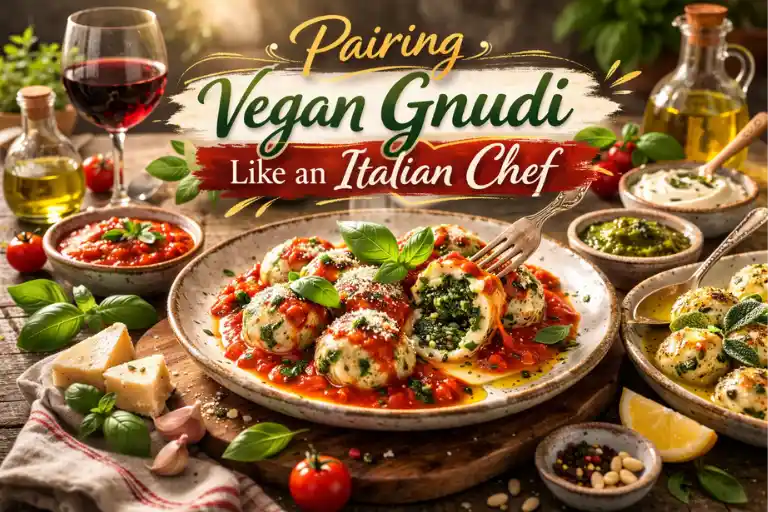
Pairing Vegan Gnudi Like an Italian Chef
To elevate your vegan gnudi recipe, think beyond just sauce. Presentation and pairing matter just as much as taste.
Wine Pairings
Light and fresh wines work best with Italian spinach and ricotta dumplings.
- Pinot Grigio – Crisp and clean
- Sauvignon Blanc – Bright acidity
- Light Chianti – If serving with marinara
The goal is to complement the creamy texture, not compete with it.
Side Dishes
Keep sides simple and fresh.
- Arugula salad with lemon vinaigrette
- Roasted vegetables
- Grilled zucchini
- Warm crusty bread
These sides balance the softness of your vegan Italian dumplings.
How Restaurants Plate Gnudi
Professional kitchens focus on space and simplicity.
- Use shallow bowls
- Place 5–6 dumplings neatly
- Avoid drowning them in sauce
Less is more when serving vegan gnudi that don’t fall apart.
Sauce-Under Plating Technique
This is a chef’s trick.
Instead of pouring sauce over the dumplings:
- Spoon sauce on the plate first.
- Place gnudi gently on top.
- Add small spoonfuls around the sides.
This keeps the dumplings visible and prevents them from becoming too soft.
Olive Oil Finishing Trick
Before serving, drizzle high-quality olive oil lightly over the top.
It:
- Adds shine
- Enhances flavor
- Makes your vegan spinach ricotta gnudi recipe look professional
Finish with fresh basil or cracked black pepper for a simple but elegant touch.
Gluten-Free, Nut-Free & High-Protein Modifications
One of the best things about this vegan gnudi recipe is how flexible it is. You can easily adjust it to match different dietary needs without losing that soft, pillowy texture.
Chickpea Flour Option (Gluten-Free & High Protein)
If you want a gluten-free vegan gnudi recipe, chickpea flour is a strong choice.
Why it works:
- Naturally gluten-free
- Higher in protein than many GF blends
- Helps bind vegan spinach ricotta gnudi firmly
Use it in small amounts and test with the boil test method to prevent density. Chickpea flour gives more structure, which helps if you worry about vegan gnudi falling apart.
Almond Flour Option
Almond flour creates a softer texture and adds mild richness.
Best for:
- Low-carb meals
- Light, tender dumplings
However, almond flour alone can be delicate. You may need a small amount of chickpea flour or extra binder for stability in your Italian vegan gnudi dumplings.
Extra Tofu Boost (High-Protein Version)
For a higher-protein version of vegan spinach ricotta gnudi, increase the tofu portion slightly and reduce flour.
Benefits:
- Stronger structure
- Better binding
- More filling meal
This modification is great if you want a healthy, protein-rich version of dairy-free spinach dumplings.
Soy-Free Version
If avoiding soy and nuts, use:
- Sunflower seed ricotta
- Oat-based ricotta alternatives
In this case, focus carefully on moisture control and flour balance. Always chill longer and test one dumpling first when making soy-free vegan gnudi.
Seasonal Variations
Adapting your vegan gnudi recipe to the seasons keeps it fresh and exciting. Small flavor changes can completely transform the dish.
Spring Lemon Basil Version
Add:
- Extra lemon zest
- Fresh chopped basil
Serve with light olive oil or thin marinara. This version makes your vegan spinach ricotta gnudi taste bright and fresh — perfect for spring dinners.
Summer Pesto Version
Swap marinara for fresh basil pesto.
Tip:
Thin the pesto slightly with olive oil so it gently coats the dumplings. This makes a vibrant and colorful version of vegan Italian dumplings ideal for warm evenings.
Fall Sage & Brown Butter Style
Use vegan butter with crispy sage leaves. Add a touch of black pepper.
This style feels cozy and comforting, similar to traditional Tuscan serving methods. It pairs beautifully with tofu ricotta gnudi because the stronger structure handles richer sauces well.
Winter Roasted Garlic Version
Mix roasted garlic into marinara or creamy cashew sauce. The deeper flavor adds warmth and richness, turning your vegan gnudi that don’t fall apart into a hearty winter meal.
Make-Ahead, Storage & Freezing Guide
One of the best parts of this vegan gnudi recipe is that you can prepare it in advance. With the right method, your vegan spinach ricotta gnudi will stay firm and delicious.
Freeze Before Cooking (Best Method)
This is the safest option.
- Shape the dumplings.
- Place them on a floured tray in a single layer.
- Freeze until solid (about 1–2 hours).
- Transfer to an airtight container.
When ready to cook, boil directly from frozen. Do not thaw. This helps prevent vegan gnudi falling apart.
Freeze After Cooking
You can also freeze cooked Italian vegan gnudi dumplings, but texture may soften slightly.
- Let them cool completely.
- Store in an airtight container.
- Freeze with light sauce or olive oil to prevent sticking.
Reheat gently to protect structure.
Reheat Without Breaking
To reheat your dairy-free spinach dumplings:
- Warm them gently in sauce over low heat.
- Avoid microwaving on high power.
- Add a splash of water or sauce to prevent drying.
Gentle heat keeps your vegan gnudi that don’t fall apart intact.
Meal Prep Strategy
For easy weekly meals:
- Prepare mixture ahead and refrigerate for up to 24 hours.
- Shape dumplings the next day.
- Freeze half the batch for later.
This makes your vegan gnudi recipe practical for busy schedules while keeping that fresh Italian flavor.
Nutritional Breakdown & How to Boost Protein
This vegan spinach ricotta gnudi recipe is lighter than traditional versions, but still satisfying.
Estimated Calories
Per serving (approximate, depending on flour and ricotta choice):
- 220–280 calories
- Lower than most traditional ricotta-based gnudi
Sauce choice will affect total calories.
Protein Per Serving
With tofu ricotta gnudi, you can expect:
- 10–14 grams of protein per serving
If using chickpea flour or adding extra tofu, protein content increases further. This makes it a balanced option compared to many pasta dishes.
Lower Carb Option
To reduce carbs:
- Use almond flour or a mix of almond + chickpea flour
- Keep portions moderate
- Pair with vegetables instead of bread
This creates a lighter version of vegan Italian dumplings while maintaining structure.
Health Positioning
This dish offers:
- Plant-based protein
- Iron from spinach
- Healthy fats from olive oil
- Dairy-free comfort food
Compared to traditional spinach and ricotta gnudi, this version is lighter, easier to digest, and suitable for vegan and dairy-free diets.
FAQs About italian spinach ricotta dumplings
What is vegan gnudi made of?
Vegan gnudi are made from spinach, a vegan ricotta substitute like tofu or cashew ricotta, flour for binding, and simple seasonings such as nutmeg, lemon zest, salt, and pepper. Unlike traditional spinach and ricotta gnudi, this dairy-free version uses plant-based ingredients to create the same soft, pillowy texture.
How do you keep vegan gnudi from falling apart?
To prevent vegan gnudi falling apart, squeeze spinach very well, use enough binder like all-purpose or chickpea flour, chill the mixture for at least 30 minutes, and cook at a gentle simmer. Always test one dumpling first. Moisture control and proper simmering are the keys to firm, stable dumplings.
Is gnudi gluten-free?
Traditional Italian gnudi dumplings contain flour, so they are not naturally gluten-free. However, you can make a gluten-free vegan gnudi recipe by using chickpea flour or a gluten-free flour blend. Chickpea flour works especially well because it adds protein and improves structure.
Can you freeze vegan gnudi?
Yes, you can freeze vegan gnudi either before or after cooking. The best method is freezing them uncooked on a tray until solid, then storing in an airtight container. Cook directly from frozen without thawing to help prevent breakage and maintain their soft texture.
What sauce is best with gnudi?
The best sauces for vegan spinach ricotta gnudi are light and simple. Classic marinara, vegan sage butter, pesto, or a roasted garlic tomato sauce work beautifully. Avoid heavy sauces that overpower the delicate texture of the dumplings.
What is the difference between gnudi and gnocchi?
Gnudi are made mainly from ricotta and spinach, while gnocchi are made from potatoes and flour. Gnudi are lighter and creamier, while gnocchi are firmer and more starchy. Both are Italian dumplings, but their texture and base ingredients are different.
Final Chef’s Tips for Perfect Vegan Gnudi
Texture Reminder
Your mixture should feel soft but hold its shape when rolled. If it feels too wet, add flour gradually. If too firm, avoid adding too much extra binder. The perfect vegan gnudi recipe is about balance.
🇮🇹 Authentic Flavor Reminder
Keep flavors simple. Use good olive oil, a pinch of nutmeg, lemon zest, and fresh herbs. Authentic Italian spinach and ricotta dumplings rely on quality ingredients, not complexity.
Common Mistake Recap
- Not squeezing spinach properly
- Skipping chill time
- Boiling too aggressively
- Overmixing the dough
Avoid these, and your vegan gnudi that don’t fall apart will turn out beautifully every time.
Encouraging Close
Making vegan gnudi may seem delicate, but once you understand moisture balance and gentle handling, it becomes simple and rewarding. With the right technique, you can enjoy authentic Italian vegan gnudi dumplings that are soft, flavorful, and completely dairy-free.