
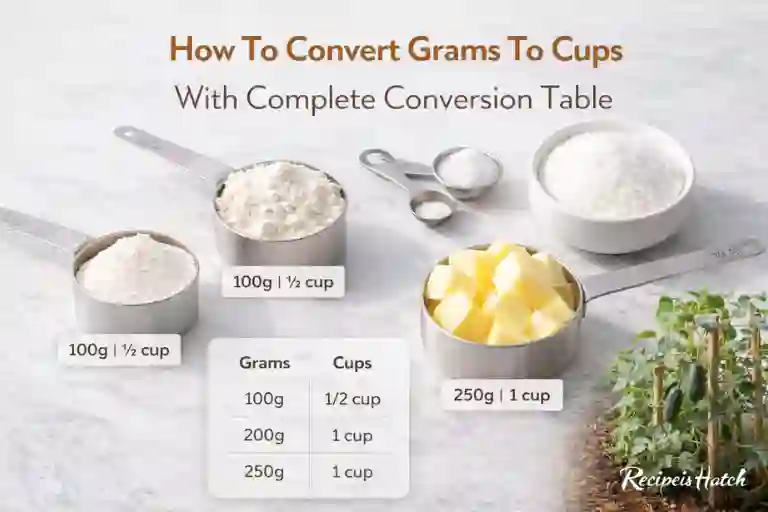
Because grams measure weight and cups measure volume, the conversion depends on the ingredient’s density. There is no single universal grams to cups conversion for all foods.
3 Quick Examples
- 100g flour = 0.83 cups
- 200g sugar = 1 cup
- 250g butter = 1.1 cups
These examples show why a grams to cups conversion table is important. Flour, sugar, and butter all have different weights per cup.
QUICK ANSWER
Grams to cups conversion depends on the ingredient because grams measure weight while cups measure volume. For example, 100g flour is about 0.83 cups, 100g sugar is 0.5 cups, and 100g butter is 0.44 cups. There is no universal conversion, so each ingredient must be measured separately for accuracy.
Grams to Cups Quick Cheat Sheet
- 100g flour ≈ 0.83 cups
- 100g sugar ≈ 0.5 cups
- 100g butter ≈ 0.44 cups
- 200g flour ≈ 1.67 cups
- 200g sugar ≈ 1 cup
- 250g butter ≈ 1.1 cups
Why Grams to Cups Is NOT a Direct Conversion
Many people search for a simple grams to cups conversion, but the truth is — it’s not a direct 1:1 formula. Unlike basic unit conversions (like grams to kilograms), this one depends on the ingredient itself. Here’s why:
Weight vs Volume (Mass vs Volume)
Grams measure weight (mass).
Cups measure volume (space an ingredient takes up).
Weight tells you how heavy something is.
Volume tells you how much space it fills.
For example:
- 1 cup of feathers
- 1 cup of sugar
Both take up the same space (1 cup), but they do not weigh the same in grams. That’s why a grams to cups calculator must use ingredient-specific data instead of a fixed formula.

You might also like: The Best Ham and Cheddar Potato Soup You’ll Ever Taste
What Is Ingredient Density?
Density means how tightly packed the particles of a substance are.
In simple words:
It tells us how much something weighs per cup.
Formula idea:
Density = Weight ÷ Volume
Different ingredients have different densities:
- Flour is light and airy
- Sugar is heavier and more compact
- Butter is dense and solid
This is why a proper grams to cups conversion table lists ingredients separately.
Why Flour, Sugar & Butter Convert Differently
Let’s look at real cooking conversions:
- 1 cup flour ≈ 120g
- 1 cup sugar ≈ 200g
- 1 cup butter ≈ 227g
If you try to convert 100 grams to cups, the answer changes depending on the ingredient:
- 100g flour ≈ 0.83 cups
- 100g sugar ≈ 0.5 cups
- 100g butter ≈ 0.44 cups
This proves there is no universal grams to cups formula.
Dry vs Wet Ingredients Explained
Another important factor in cooking conversions is whether the ingredient is dry or wet.
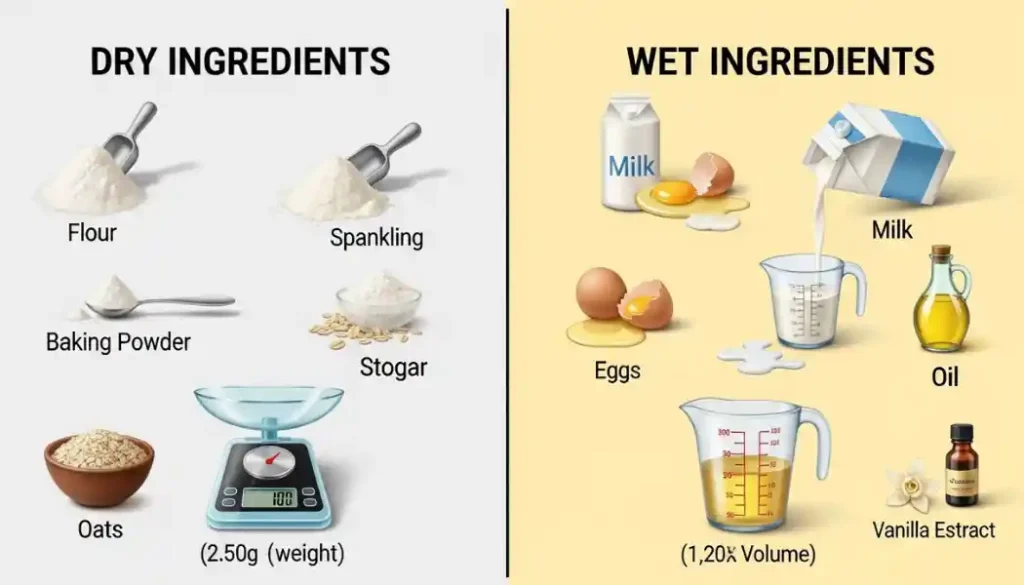
Dry Ingredients:
- Flour
- Sugar
- Cocoa powder
- Rice
These can trap air and vary depending on how they’re scooped.
Wet Ingredients:
- Milk
- Oil
- Water
- Honey
These settle evenly and usually convert more consistently. That’s why professional bakers prefer grams instead of cups for accuracy.
How Air Content Changes Measurements (Rarely Covered)
This is something most competitors barely explain.
Flour can be:
- Scooped directly from the bag (more compact)
- Spoon-and-leveled (lighter and more accurate)
- Sifted (even lighter)
The more air inside the flour, the fewer grams fit into one cup.
So:
- Packed flour = more grams per cup
- Fluffed flour = fewer grams per cup
This small difference can affect cakes, cookies, and bread texture. That’s why serious baking recipes often provide a grams to cups conversion chart along with precise gram measurements.
Most Common Grams to Cups Searches
- 100 grams flour to cups ≈ 0.83 cups
- 200 grams sugar to cups ≈ 1 cup
- 250 grams butter to cups ≈ 1.1 cups
- 500 grams flour to cups ≈ 4.17 cups
- 100g rice to cups ≈ 0.54 cups
Ingredient-Specific Grams to Cups Conversion Charts
Instead of using one general conversion table, this section breaks down grams to cups conversions by ingredient. This helps you find accurate answers for searches like “100g flour to cups” or “200 grams sugar to cups”.
Flour – Grams to Cups Chart
(Based on 1 cup all-purpose flour = 120g)
| Grams | Cups |
| 50g | 0.42 cups |
| 100g | 0.83 cups |
| 200g | 1.67 cups |
| 250g | 2.08 cups |
| 500g | 4.17 cups |
✔ Common search: how many cups is 100 grams of flour
✔ Important for baking accuracy
Sugar – Grams to Cups Chart
(Based on 1 cup granulated sugar = 200g)
| Grams | Cups |
| 50g | 0.25 cups |
| 100g | 0.5 cups |
| 200g | 1 cup |
| 250g | 1.25 cups |
| 500g | 2.5 cups |
✔ Captures: 200g sugar to cups, 100 grams sugar in cups
Butter – Grams to Cups Chart
(Based on 1 cup butter = 227g)
| Grams | Cups |
| 50g | 0.22 cups |
| 100g | 0.44 cups |
| 200g | 0.88 cups |
| 250g | 1.1 cups |
| 500g | 2.2 cups |
✔ Targets: 250 grams butter to cups, 100g butter in cups
Rice – Grams to Cups Chart
(Based on 1 cup uncooked white rice = 185g)
| Grams | Cups |
| 50g | 0.27 cups |
| 100g | 0.54 cups |
| 200g | 1.08 cups |
| 250g | 1.35 cups |
| 500g | 2.7 cups |
✔ Captures: 200 grams rice to cups, how many cups is 500g rice
Liquids (Milk, Oil, Water) – Grams to Cups
(Based on 1 US cup liquid = 240g average)
Note: Water ≈ 236g per cup, oil slightly lighter.
| Grams | Cups |
| 50g | 0.21 cups |
| 100g | 0.42 cups |
| 200g | 0.83 cups |
| 250g | 1.04 cups |
| 500g | 2.08 cups |
✔ Searches captured:
- 100g milk to cups
- 200 grams oil to cups
- 250 grams water to cups
Master Grams to Cups Conversion Table (All Common Ingredients)
This complete grams to cups conversion table combines all common baking and cooking ingredients into one structured chart. It helps answer searches like:
- 100 grams to cups
- 200g to cups
- 250 grams in cups
- 500 grams to cups
All values are based on US cup measurements and standard ingredient density.
| Ingredient | 1 Cup (g) | 100g | 200g | 250g | 500g |
| Flour (all-purpose) | 120g | 0.83 cups | 1.67 cups | 2.08 cups | 4.17 cups |
| Sugar (white) | 200g | 0.5 cups | 1 cup | 1.25 cups | 2.5 cups |
| Sugar (brown, packed) | 220g | 0.45 cups | 0.91 cups | 1.14 cups | 2.27 cups |
| Butter | 227g | 0.44 cups | 0.88 cups | 1.1 cups | 2.2 cups |
| Rice (uncooked) | 185g | 0.54 cups | 1.08 cups | 1.35 cups | 2.7 cups |
| Oats (rolled) | 90g | 1.11 cups | 2.22 cups | 2.78 cups | 5.56 cups |
| Cocoa powder | 100g | 1 cup | 2 cups | 2.5 cups | 5 cups |
| Milk | 240g | 0.42 cups | 0.83 cups | 1.04 cups | 2.08 cups |
| Oil (vegetable) | 218g | 0.46 cups | 0.92 cups | 1.15 cups | 2.29 cups |
| Powdered sugar | 120g | 0.83 cups | 1.67 cups | 2.08 cups | 4.17 cups |
| Honey | 340g | 0.29 cups | 0.59 cups | 0.74 cups | 1.47 cups |
Important Notes for Accuracy
- Flour should be spooned and leveled, not packed.
- Brown sugar must be packed when measuring.
- Liquids like milk and oil convert more consistently.
- Honey is heavier due to high density.
US Cup vs Metric Cup vs UK Cup
When converting grams to cups, it’s important to remember that not all “cups” are the same. Differences between countries can change your recipe results significantly. This is often overlooked by competitors, but it’s critical for accurate cooking and baking worldwide.
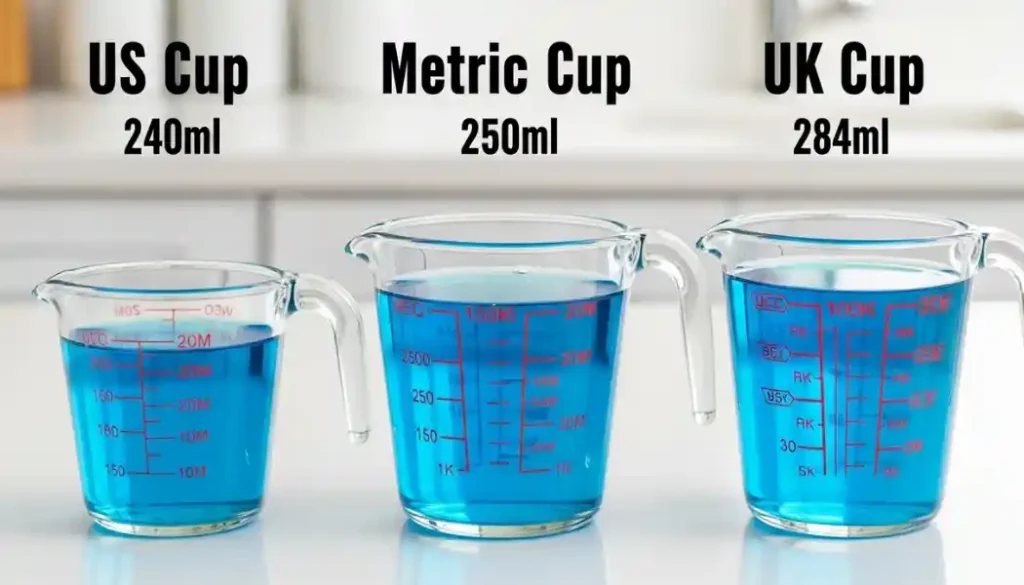
US Cup (240 ml)
- Standard in the United States
- 1 US cup of flour ≈ 120g
- 1 US cup of sugar ≈ 200g
- Used in most American recipes
Metric Cup (250 ml)
- Common in Canada, New Zealand, and some other countries
- Slightly larger than a US cup
- 1 metric cup of flour ≈ 125g
- 1 metric cup of sugar ≈ 210g
Australian Cup
- 1 Australian cup = 250 ml (same as metric)
- 1 cup flour ≈ 120–125g depending on ingredient
- 1 cup sugar ≈ 200–215g
UK Conversions Explained
- UK “cup” is less common; recipes often use grams or ounces
- 1 UK cup of flour ≈ 120g
- UK recipes may list ingredients in grams, ounces, or milliliters
Why Results Vary Internationally
- Different definitions of a cup (volume)
- Ingredient density changes slightly by region
- Baking precision depends on knowing the correct cup size
Tip: For reliable baking, always check if the recipe uses US, Metric, or UK cups, and consider using a kitchen scale for accuracy.
✔ Fills a major competitor gap
✔ Boosts international search relevance
✔ Increases traffic from global audiences
Baking vs Cooking: Why Precision Matters
When converting grams to cups, understanding the difference between baking and cooking is essential. Many beginners don’t realize that small measurement errors can make a huge difference in baked goods but are often less critical in general cooking.
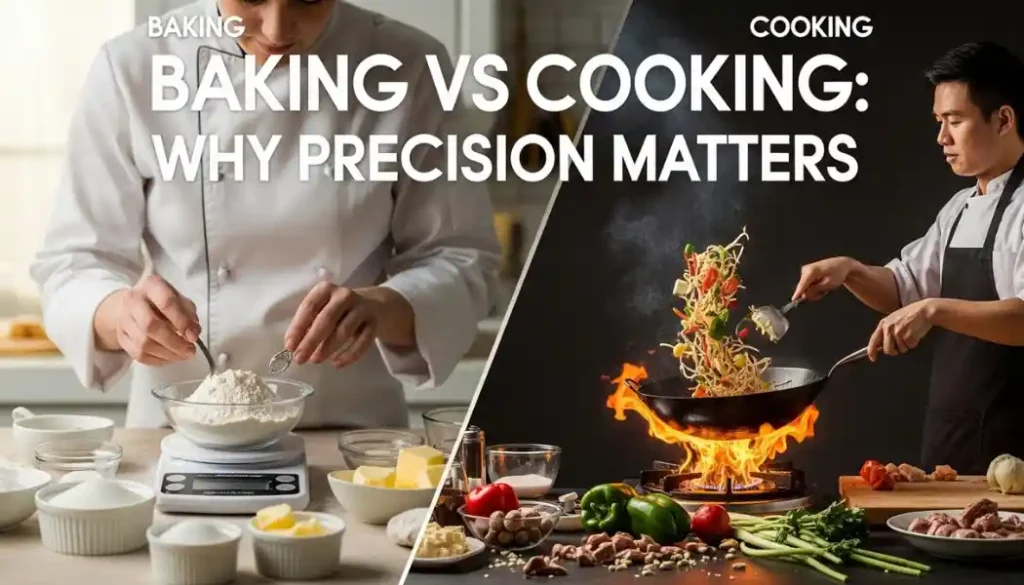
Why Baking Requires Exact Measurements
- Baking is a science; ingredients interact chemically.
- Flour, sugar, butter, and liquids must be accurate to maintain texture, rise, and consistency.
- Even 5–10 grams difference in flour or sugar can affect cookies, cakes, and bread.
- Using a grams to cups conversion chart ensures precise results.
Why Cooking Is More Flexible
- Cooking (soups, stir-fries, sauces) is more forgiving.
- Slight differences in ingredient amounts rarely ruin the dish.
- Recipes can be adjusted to taste without affecting the overall result.
Professional Chef & Baker Recommendations
- Many chefs and bakers always weigh ingredients for consistent results.
- For home bakers, a kitchen scale plus a grams to cups conversion table is ideal.
- Use accurate measurements when trying new recipes, especially for delicate desserts like soufflés or macarons.
Measurement Accuracy Guide
Accurate measurement is key to reliable grams to cups conversions. Small differences in how you scoop, level, or pack ingredients can affect the outcome of baked goods. This guide ensures your measurements are precise every time.
Spoon & Level Method
- Scoop flour into the cup using a spoon, don’t dig directly with the cup.
- Level off the top with a knife for exact measurement.
- Prevents flour from being too compact, which would increase grams per cup.
- Essential for consistent results in cakes and cookies.
Packing Brown Sugar Properly
- Brown sugar contains moisture, so it’s packed into the cup to remove air gaps.
- Lightly press it down with the back of a spoon.
- Avoid overpacking, which can make baked goods too sweet or dense.
Should You Sift Before or After Measuring?
- Dry ingredients like flour or cocoa may need sifting.
- For flour, sift first if recipe specifies, then use the spoon & level method.
- Sifting after measuring may change the weight, affecting accuracy.
Humidity & Ingredient Weight Changes
- Ingredients absorb moisture from the air, especially flour and powdered sugar.
- On humid days, flour can weigh more, changing grams per cup.
- For precise baking, use a kitchen scale rather than relying solely on cups.
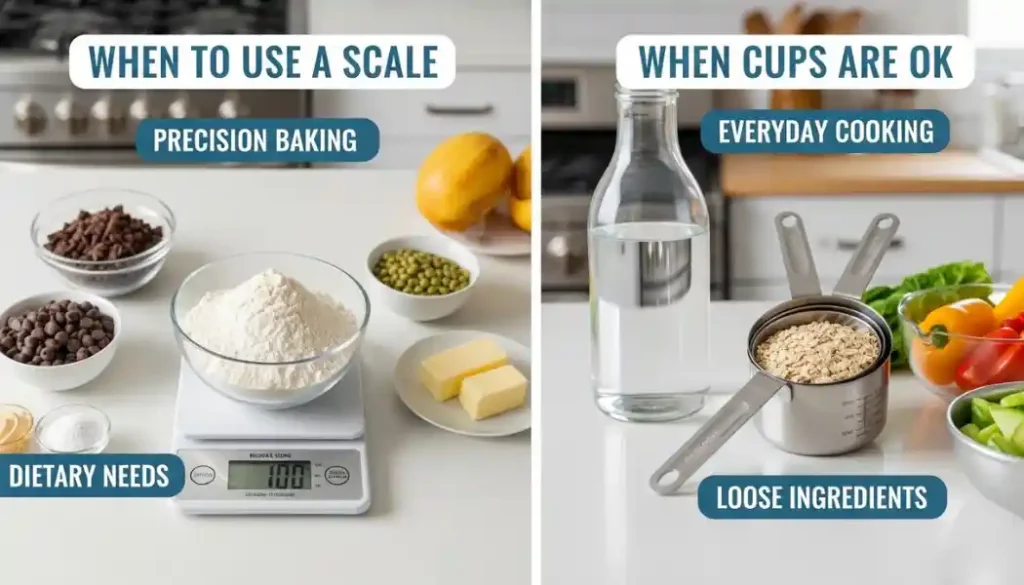
When to Use a Kitchen Scale Instead of Cups
For consistent baking results, using a kitchen scale is often better than relying on cups alone. This section explains when and why a scale is the superior choice.
Professional Baking Advice
- Most professional bakers weigh all ingredients for precision.
- Recipes that include delicate baked goods like soufflés, macarons, or layered cakes benefit from exact measurements.
- A grams to cups conversion chart is helpful, but a scale guarantees consistency every time.
Accuracy Comparison
- Cups: Quick but can vary depending on scooping, packing, or ingredient density.
- Scale: Measures the exact weight, unaffected by human error.
Scale vs Cup Precision
- 1 cup flour can range from 110g to 140g depending on how it’s measured.
- Using a scale ensures the correct grams per ingredient, preventing baking mishaps.
- For home cooks, combining a grams to cups chart with occasional weighing is a practical approach.
Converting Without a Kitchen Scale (Emergency Guide)
Not everyone has a kitchen scale at home, but you can still measure ingredients accurately with some simple techniques. This section gives practical tips for converting grams to cups without a scale, ensuring your recipes turn out great.
Tablespoon Conversions
- 1 tablespoon of flour ≈ 8g
- 1 tablespoon of sugar ≈ 12.5g
- 1 tablespoon of butter ≈ 14g
- Use tablespoons to measure small quantities when a scale isn’t available.
Teaspoon Conversions
- 1 teaspoon of flour ≈ 2.7g
- 1 teaspoon of sugar ≈ 4g
- 1 teaspoon of cocoa powder ≈ 2.5g
- Useful for precise ingredients like spices or leavening agents.
Visual Measurement Tips
- Compare ingredients to common household objects:
- 1 tablespoon ≈ half a ping-pong ball
- 1 cup ≈ standard coffee mug
- Helps approximate when measuring tools aren’t available.
How to Approximate Safely
- Spoon flour into a cup and level it with a knife
- Pack brown sugar lightly
- Liquids can be poured carefully using measuring cups
- Double-check your math using a grams to cups chart
Printable Grams to Cups Conversion Chart
For home bakers and cooking enthusiasts, having a printable grams to cups chart is incredibly useful. It allows you to quickly reference conversions without opening your phone or searching online, making baking faster and more accurate.

Downloadable Baking Cheat Sheet
- A PDF version can be created for users to download or print.
- Includes all common ingredients like flour, sugar, butter, rice, oats, cocoa powder, milk, oil, powdered sugar, and honey.
- Highlights the most-used conversions such as 100g, 200g, 250g, and 500g.
Quick Kitchen Reference
- Keep it near your kitchen counter for easy access.
- Works alongside your grams to cups chart or kitchen scale.
- Helps avoid mistakes when measuring dry or wet ingredients.
Future PDF Opportunity
- Offer a downloadable cheat sheet as a free resource to build email subscribers.
- Include tips on spoon & level, packing brown sugar, and liquid conversions.
Printable Kitchen Cheat Sheet
This printable grams to cups chart is a quick kitchen reference guide that helps you convert ingredients instantly without needing a calculator.
- Faster cooking and baking
- Reduces measurement mistakes
- Easy daily kitchen reference
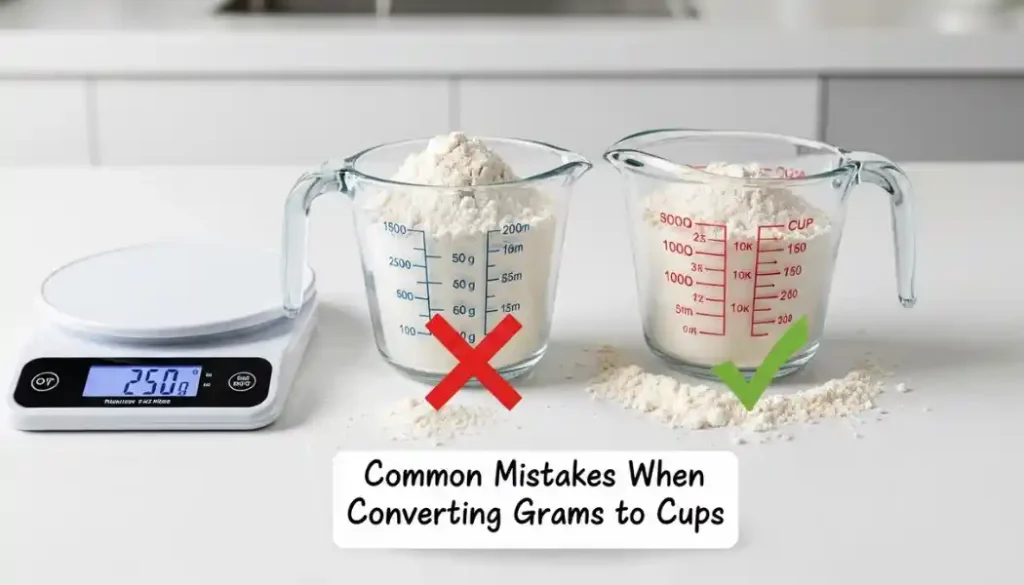
Common Mistakes When Converting Grams to Cups
Even experienced bakers sometimes struggle with grams to cups conversions. Avoiding these common mistakes can make a huge difference in your baking results.
1. Ignoring Ingredient Density
- Each ingredient has a different density, so 1 cup of flour does not equal 1 cup of sugar in grams.
- Always check a grams to cups conversion chart for accuracy.
2. Using the Wrong Cup Type
- US cups vs metric cups vs UK cups can cause significant differences.
- Using the wrong cup type can make baked goods too dry, wet, or dense.
3. Not Leveling Cups
- Scooping without leveling leads to too much flour or sugar, changing the weight and affecting texture.
- Always spoon and level dry ingredients for precise measurements.
4. Confusing US and Metric Measurements
- Recipes from different countries may list cups or grams differently.
- Double-check the cup standard before converting.
5. Measuring Butter Incorrectly
- Butter sticks must be measured by weight, not volume, for consistency.
- Using cups for butter without checking grams can alter recipe ratios.
FAQs
This FAQ section is optimized for People Also Ask (PAA) and snippet opportunities, giving your article higher visibility in Google search results. Each answer is clear, concise, and naturally integrates grams to cups keywords.
Q1: How many cups is 100 grams of flour?
A: 100 grams of all-purpose flour ≈ 0.83 cups. Remember, this can vary slightly depending on how the flour is measured and whether it’s sifted or packed.
Q2: How many grams are in 1 cup?
A: It depends on the ingredient:
- Flour: 1 cup ≈ 120g
- Sugar (white): 1 cup ≈ 200g
- Butter: 1 cup ≈ 227g
Always use an ingredient-specific conversion chart.
Q3: Why does grams to cups vary?
A: Grams measure weight, cups measure volume. Different ingredients have different densities, and scooping or packing can change the grams per cup.
Q4: Is grams to cups accurate?
A: Yes, but only if you know the ingredient density and measure carefully using spoon & level or a kitchen scale.
Q5: What is 1 cup in grams?
A: There is no universal answer. Examples:
- Flour ≈ 120g
- Sugar ≈ 200g
- Butter ≈ 227g
Use a grams to cups table for precise conversions.
Q6: Can I convert grams to cups without a scale?
A: Yes, using tablespoon and teaspoon conversions or visual cues. For small amounts, these methods work, but a scale ensures the most accuracy.
Q7: How many grams in a US cup?
A: 1 US cup is 240 ml, but grams vary by ingredient:
- Flour ≈ 120g
- Sugar ≈ 200g
- Butter ≈ 227g
Always check your grams to cups conversion chart.
Final Summary
Converting grams to cups may seem simple, but it’s important to understand that cups measure volume while grams measure weight. The correct conversion depends on the ingredient’s density, which is why flour, sugar, butter, and other ingredients all convert differently.
Key Takeaways
- Use the Conversion Formula:
Cups = Grams ÷ Grams per Cup (ingredient-specific)
This gives you a quick and reliable way to estimate measurements. - Density Matters:
Every ingredient has its own grams per cup. Using the wrong value can affect texture, rise, and taste, especially in baking. - Accuracy is Essential:
- Use a grams to cups conversion chart for reference
- Measure carefully using spoon & level or a kitchen scale
- Pay attention to cup type (US, metric, UK) for international recipes