

As of March 29, 2026, mastering a perfect pan seared mahi recipe is one of the easiest ways to create a restaurant-quality seafood dinner at home. Mahi-mahi is loved for its mild flavor, firm texture, and quick cooking time, making it ideal for both beginners and experienced cooks.
But here’s the truth—most people either overcook it or fail to get that golden crust. The secret isn’t complicated. It’s all about heat control, proper seasoning, and timing.
In this complete guide, you’ll learn exactly how to pan sear mahi to perfection, including step-by-step techniques, pro chef tips, flavor variations, and serving ideas so every bite turns out juicy, flaky, and full of flavor.
Quick Answer: How to Pan Sear Mahi Perfectly
To pan sear mahi, cook fillets in a hot skillet with butter or oil for 3–4 minutes per side until golden brown and flaky. Pat fish dry, season well, and avoid moving it until a crust forms. Internal temperature should reach 145°F.
Why You’ll Love This Recipe

You might also like: Reverse Seared Tomahawk Steak
There are so many reasons to try this pan seared mahi recipe. First, it’s quick and easy for weeknight dinners. With just a few simple ingredients and step-by-step instructions, you can have a delicious, flaky fish ready in under 20 minutes.
Second, it delivers restaurant-style results at home. By following our tips on how to pan sear mahi , you’ll get a golden, crispy crust while keeping the fish moist and tender—just like you’d expect at a fancy seafood restaurant.
Finally, it’s a healthy, high-protein fish dinner. Mahi is rich in protein, low in calories, and packed with essential nutrients, making this recipe perfect for anyone who wants a nutritious yet flavorful meal that satisfies both taste and health.
Ingredients for Perfect Pan Seared Mahi
To make this pan seared mahi recipe, you only need a few simple, flavorful ingredients. Using fresh fish, lemon, garlic, butter, and herbs ensures a tender, flaky, and perfectly seasoned fillet every time.
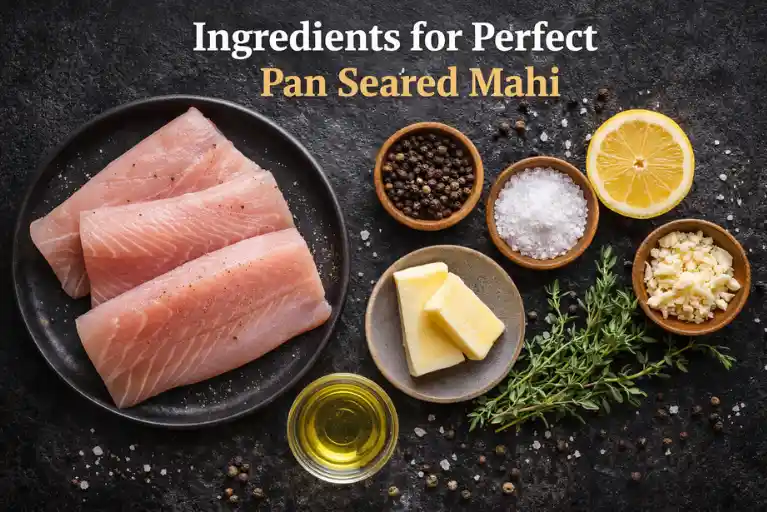
Ingredients:
- 4 mahi fillets (6 ounces each)
- 2 tablespoons butter (or olive oil for a lighter option)
- 2 cloves garlic, minced
- Juice of 1 lemon
- 1 teaspoon fresh thyme or parsley, chopped
- Salt and pepper, to taste
Optional Low-Carb / Healthy Variations:
- Replace butter with extra virgin olive oil for a lighter version.
- Serve with steamed vegetables or cauliflower rice for a low-carb, high-protein meal.
With these ingredients ready, you’re all set to move on to the perfect searing technique.
Best Oil for Pan Seared Mahi (Game-Changer Section)
The type of fat you use affects both flavor and crust.
- Butter → Rich flavor but burns quickly
- Olive oil → Healthy, lighter taste
- Butter + oil mix → Best balance (recommended)
Essential Tools & Equipment
Before you start cooking your pan seared mahi , having the right tools makes all the difference. Using the best equipment ensures your fish gets a perfect golden crust while staying flaky and tender inside.
Must-Have Tools:
- Nonstick or stainless steel skillet: Ideal for even heat and a crisp sear.
- Spatula: A thin, flexible spatula helps flip the fillets without breaking them.
- Tongs: Perfect for gently turning fillets or basting with butter.
- Cooking thermometer (optional): Ensures the fish reaches a safe 145°F for perfect doneness.
How Tools Affect the Sear:
Using the right pan and utensils helps prevent sticking and ensures an even, restaurant-style sear. Even small details, like preheating the pan or using a butter-oil mix, can create a crisp crust and tender interior that everyone will love.
Step-by-Step Instructions
Cooking pan seared mahi is easier than you think. Follow these steps to get a crispy, golden crust while keeping the inside tender and flaky.
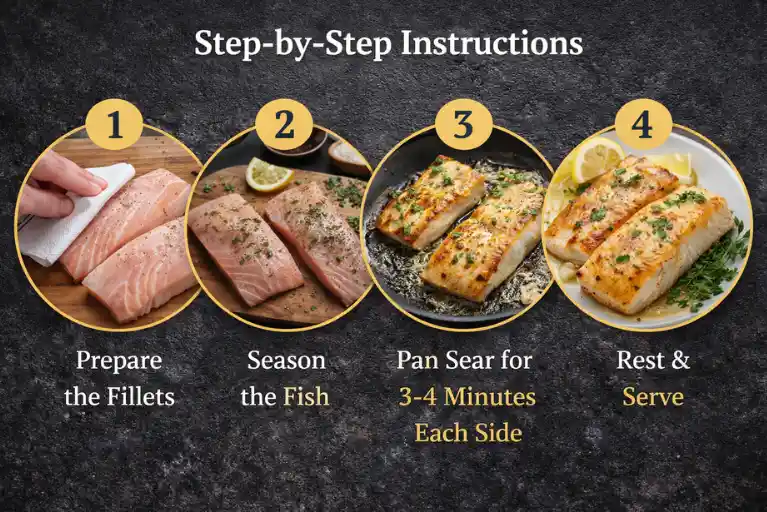
Preparing Your Mahi Fillets
Start by patting the mahi fillets dry with paper towels. This step is crucial for a perfect sear. Remove any skin or thin edges if needed, and let the fillets come to room temperature for about 10–15 minutes. Dry, room-temperature fillets cook evenly and develop a better crust.
Seasoning Tips for Maximum Flavor
Generously season each fillet with salt and freshly ground black pepper. For extra flavor, rub a mixture of garlic, herbs, and lemon zest over the top. This ensures your pan seared mahi is full of flavor in every bite.
How to Pan Sear Mahi Perfectly
- Preheat a nonstick or stainless steel skillet over medium-high heat.
- Add butter or olive oil (or a mix for rich flavor).
- Place the fillets skin-side down (if skin-on) and cook 3–4 minutes per side, depending on thickness.
- Avoid moving the fillets until they release easily from the pan.
- Spoon melted butter and pan juices over the top to baste for extra flavor.
Resting the Fish Before Serving
Once cooked, let the fillets rest on a plate for 2–3 minutes. Resting allows the juices to redistribute, keeping the fish moist and tender. Serve immediately with lemon wedges or your favorite sauce for a restaurant-quality mahi dinner at home.
How to Know When Mahi Is Done
Cooking fish perfectly depends on knowing when it’s done—not just timing.
Mahi is fully cooked when it turns opaque and flakes easily with a fork. The inside should be moist but not raw. If you’re using a thermometer, the internal temperature should reach 145°F (63°C).
Another visual sign is the color change. Raw mahi looks slightly translucent, but once cooked, it becomes solid white.
Pan Seared Mahi Cooking Time Chart
| Thickness | Cook Time Per Side | Total Time |
|---|---|---|
| ½ inch | 2–3 minutes | 4–6 min |
| 1 inch | 3–4 minutes | 6–8 min |
| 1.5 inch | 4–5 minutes | 8–10 min |
Cooking time depends on thickness, not just weight.
Pro Tips for Beginners
Even if you’re new to cooking fish, these pro tips will help you make perfect pan seared mahi every time.
Prevent Fish from Sticking
Make sure your fillets are completely dry before cooking. Use a preheated skillet and add butter or oil just before adding the fish. Avoid moving the fillets too soon — wait until they naturally release from the pan for a crispy, golden crust.
Avoid Overcooking
Mahi cooks quickly, so keep an eye on it. 3–4 minutes per side is usually enough for 6-ounce fillets. The fish should be opaque and flake easily with a fork. Overcooking can make it dry and tough, so timing is key.
Handling Frozen vs. Fresh Fillets
Fresh fillets give the best flavor and texture, but frozen works too. Always thaw completely in the refrigerator before cooking, and pat dry. Cooking directly from frozen can lead to uneven searing and a less tender interior.
With these tips, even beginners can confidently create a delicious, restaurant-quality mahi dinner at home.
How to Make Mahi Extra Crispy
For a crispier crust:
- Pat fish completely dry
- Use high heat
- Don’t overcrowd pan
- Press lightly for even contact
Common Mistakes That Ruin Pan Seared Mahi
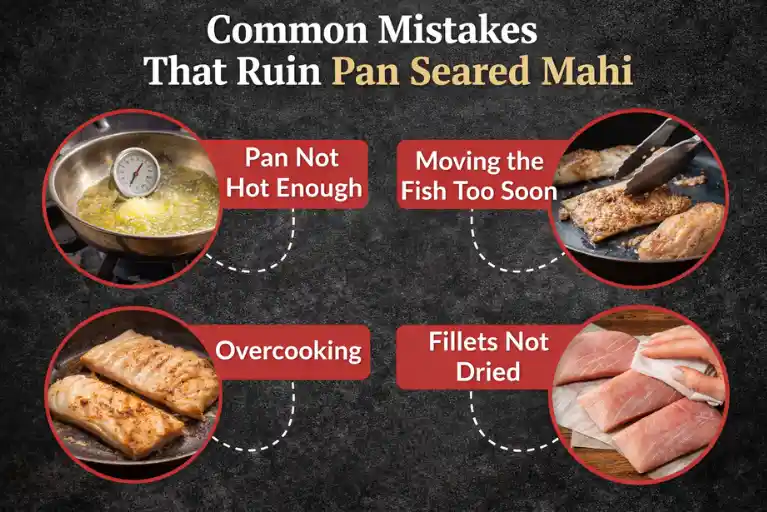
Even a simple recipe can go wrong if these mistakes happen:
1. Not drying the fish
Moisture prevents a crispy crust.
2. Moving fish too early
Let it naturally release before flipping.
3. Cooking on low heat
Results in soft, pale fish instead of golden crust.
4. Overcooking
The biggest mistake—leads to dry, rubbery texture.
5. Overcrowding the pan
Lowers heat and ruins sear.
Pan Seared Mahi vs Grilled Mahi
Both methods are great, but they give different results:
| Method | Texture | Flavor | Best For |
|---|---|---|---|
| Pan seared | Crispy outside, juicy inside | Rich, buttery | Quick meals |
| Grilled | Smoky, slightly firmer | Charred flavor | BBQ dishes |
Flavor Variations & Sauce Ideas
One of the best things about pan seared mahi is how versatile it is. Here are some delicious variations and sauces to make your meal even more exciting:
Garlicky Lemon Mahi
Add extra garlic and fresh lemon juice while searing. This creates a bright, zesty flavor that complements the mild, flaky fish perfectly. Finish with a sprinkle of fresh parsley for a colorful touch.
Lemon Butter Sauce
Melt butter with lemon juice and a pinch of garlic in the pan after cooking. Spoon it over your fillets for a rich, buttery finish that pairs beautifully with steamed vegetables or rice.
Herb-Crusted Pan Seared Mahi
Coat the fillets with fresh or dried herbs like thyme, parsley, or dill before cooking. This adds extra aroma and flavor, creating a restaurant-style crust that makes every bite special.
Low-Carb / Keto-Friendly Version
Replace butter with olive oil for a lighter option and serve with steamed vegetables, cauliflower rice, or zucchini noodles. This keeps the dish high-protein, low-carb, and perfect for healthy weeknight dinners.
These variations let you customize your pan seared mahi mahi to suit any taste or diet, while keeping it flaky, juicy, and full of flavor.
Serving Suggestions & Pairings
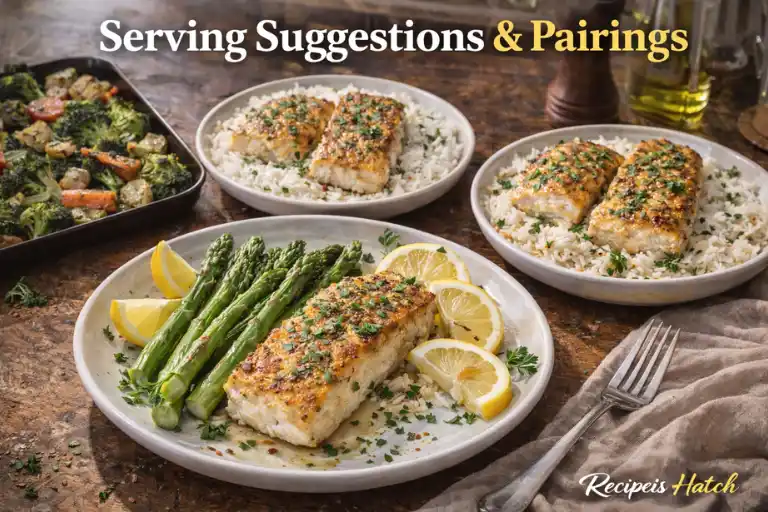
Your pan seared mahi mahi is versatile and pairs well with a variety of sides to create a complete, satisfying meal.
Vegetable & Grain Pairings
Serve your fillets with steamed asparagus, roasted vegetables, or a fresh salad for a light, healthy option. For heartier meals, rice bowls or quinoa make perfect bases, absorbing all the lemon butter sauce or pan juices.
Creative Serving Ideas
Turn your mahi into tacos or wraps with fresh toppings like avocado, cabbage, and a squeeze of lime for a fun and flavorful twist.
Beverage Pairings
Pair with a crisp white wine, like Sauvignon Blanc or Chardonnay, to complement the mild, flaky fish and zesty sauces. Sparkling water with lemon is a refreshing non-alcoholic choice.
With these serving suggestions and pairings, your pan seared mahi mahi dinner becomes a restaurant-style experience at home, perfect for family meals or entertaining guests.
Nutrition Facts & Health Benefits
One of the best things about pan seared mahi is that it’s not only delicious but also nutritious. A typical 6-ounce fillet contains approximately:
- Calories: 220
- Protein: 40g
- Fat: 5g
- Carbohydrates: 0g
This makes it a high-protein, low-calorie option, perfect for healthy weeknight dinners.
Health Benefits
Mahi is rich in omega-3 fatty acids, which are great for heart and brain health. It’s also low in saturated fat and provides essential vitamins and minerals, including vitamin B12, potassium, and selenium.
Including this high-protein, omega-3 rich fish in your meals can support muscle maintenance, heart health, and overall wellness, making this recipe both flavorful and healthy.
FAQs About Pan Seared Mahi
How long to sear mahi ?
For a 6-ounce fillet, pan sear mahi for about 3–4 minutes per side over medium-high heat. The fish should be opaque and flake easily with a fork. Timing may vary depending on thickness, so using a cooking thermometer can help ensure perfect doneness.
Can I cook frozen mahi ?
Yes, but always thaw frozen fillets completely in the refrigerator before cooking. Cooking directly from frozen can cause uneven searing and a less tender interior, so for the best results, dry the fillets thoroughly before adding them to the pan.
How do I prevent sticking?
Make sure your mahi fillets are completely dry, preheat the skillet, and add butter or oil just before cooking. Avoid moving the fillets too soon — let them naturally release from the pan for a golden, crispy crust.
How to make pan seared mahi crispy without overcooking?
Use a hot skillet and a small amount of fat (butter or olive oil). Cook each side 3–4 minutes, depending on thickness. Baste with melted butter or pan juices for flavor without overcooking. Rest the fish 2–3 minutes before serving to keep it moist and tender.
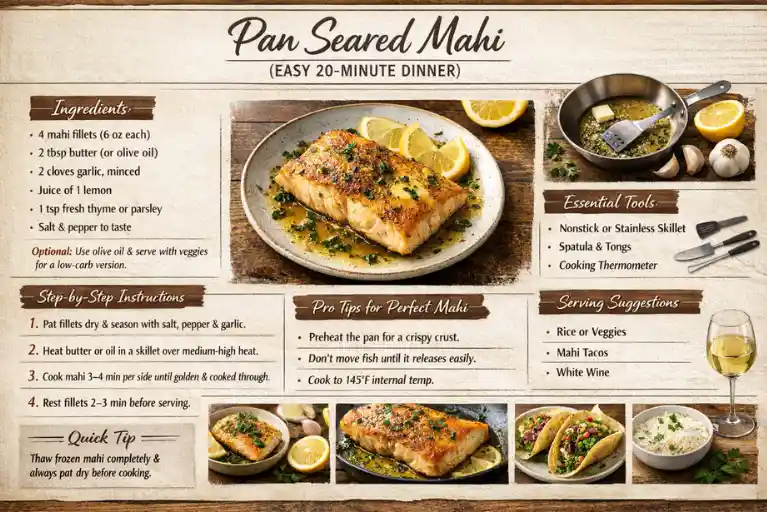
Recipe Card – Pan Seared Mahi (Easy 20-Minute Dinner)
Course: Seafood RecipesCuisine: American, SeafoodDifficulty: Easy4
servings10
minutes20
minutes220
kcalThis pan seared mahi recipe is quick, healthy, and packed with flavor. With a crispy golden crust and tender flaky center, it’s a perfect 20-minute seafood dinner for any night of the week.
Ingredients
4 mahi fillets (about 6 oz each)
2 tablespoons butter
1 tablespoon olive oil
2 cloves garlic, minced
Juice of 1 lemon
1 teaspoon fresh thyme or parsley, chopped
Salt and black pepper (to taste)
- Optional
Lemon zest (extra flavor)
Red pepper flakes (for spice)
Instructions
- Prepare the Fish
Pat mahi fillets completely dry with paper towels. Let them sit at room temperature for 10–15 minutes for even cooking. - Season
Season both sides with salt, pepper, and optional lemon zest or herbs. - Heat the Pan
Heat a skillet over medium-high heat. Add olive oil, then butter once hot. - Sear the Fish
Place fillets in the pan and cook for 3–4 minutes per side. Do not move until a golden crust forms. - Add Flavor
Add garlic and spoon melted butter over the fish while cooking. - Check Doneness
Fish should be opaque and flaky. Internal temp: 145°F (63°C). - Rest & Serve
Remove from pan and rest for 2–3 minutes. Squeeze lemon juice on top and serve.
Recipe Video
Notes
- Always dry fish before cooking for best crust
- Use butter + oil for perfect flavor and sear
- Avoid overcooking to keep fish juicy
Conclusion
Now that you’ve learned how to pan sear mahi perfectly, it’s time to put your skills to the test! This easy, flavorful mahi recipe is perfect for weeknight dinners, special occasions, or anytime you want a healthy, high-protein meal.
Don’t be afraid to try the flavor variations, like garlicky lemon mahi , lemon butter sauce, or herb-crusted fillets, and pair your fish with asparagus, rice bowls, or tacos for a complete, delicious dinner.
We’d love for you to give this recipe a try, experiment with your favorite sides, and share your results. Your kitchen can now create a restaurant-quality pan seared mahi that’s crispy on the outside, tender on the inside, and full of flavor!