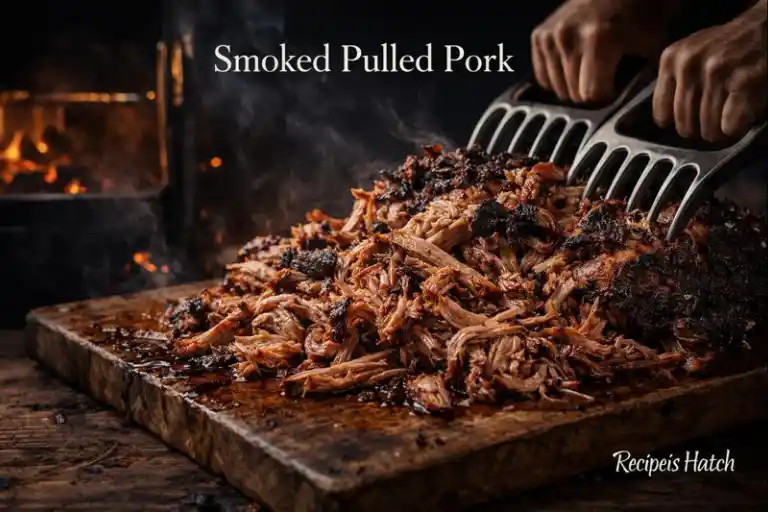
Smoked pulled pork is a BBQ favorite because of its rich flavor and tender, juicy texture. The secret lies in low-and-slow cooking, which allows the smoke to penetrate the meat while slowly breaking down the pork shoulder’s fat and connective tissues. This process creates that signature juicy, tender smoked pulled pork recipes we all love. Choosing the right pork cut, like Boston butt or pork shoulder, is essential because the fat content directly affects flavor and moisture.
Using smoker woods such as hickory, applewood, or cherry adds depth and a smoky aroma that enhances the meat’s natural taste. The internal temperature must reach around 195–205°F to ensure the pork is soft enough to pull apart easily. Understanding this science helps any home cook achieve perfect smoked pulled pork, whether you’re making a pulled pork sandwich, tacos, or a BBQ platter.
Quick Answer – Smoked Pulled Pork
Smoked pulled pork is a BBQ favorite thanks to its juicy, tender texture and rich smoky flavor. Start with a pork shoulder (Boston butt), prep it with a dry or wet brine, and apply a flavorful rub. Smoke it low-and-slow at 225–250°F using woods like hickory, apple, or cherry, until the internal temperature reaches 195–205°F. Let it rest, then shred gently and add BBQ sauce or spices to taste. Serve in sandwiches, sliders, tacos, or party platters, and store leftovers in the fridge for up to 4 days or freeze for 2–3 months. This method ensures perfectly tender, juicy, and flavorful smoked pulled pork every time.
Selecting the Best Pork Cut
Choosing the right pork cut is key for juicy smoked pulled pork. The most popular choice is the pork shoulder, also known as Boston butt, which has a good balance of fat and connective tissue for tenderness. Picnic shoulder can also work but may need longer cooking to stay moist. When selecting your cut, consider cost vs. quality—higher fat content usually means richer flavor, but even affordable cuts can be excellent if cooked properly. Make sure to trim excess fat, leaving some for flavor and juiciness. Picking the right cut sets the foundation for perfect smoked pulled pork, whether you’re preparing pulled pork sandwiches, sliders, or tacos for a BBQ gathering.
Preparing the Meat Like a Pro
Proper prep makes a huge difference in your smoked pulled pork. You can dry brine by rubbing salt and spices into the meat, or wet brine by soaking it in a flavorful solution to lock in moisture. For deeper flavor, some cooks use injections with marinades to infuse the pork internally.
Applying a binder, like mustard or oil, helps your rub stick evenly, creating a flavorful crust. Don’t forget to pat the meat dry before smoking, as excess moisture can prevent proper bark formation. With these steps, your pulled pork shoulder will be tender, flavorful, and ready for a long, low-and-slow smoke, giving you the best smoked pulled pork experience.
Smoking Techniques
Smoking pulled pork requires low-and-slow cooking. You can use a pellet smoker, electric smoker, or charcoal smoker, depending on what’s available. Wood selection impacts flavor—hickory, apple, cherry, or oak create smoky richness that enhances the meat. Maintain temperature between 225–250°F, ensuring even airflow in the smoker for consistent results. Spritzing or mopping with a liquid like apple juice keeps the meat moist. Consider foiling the pork mid-cook to prevent over-drying, then finish unwrapped for a crispy bark. Letting it rest after smoking allows juices to redistribute, producing tender, flavorful pulled pork ready for sandwiches, sliders, or tacos.
Signature Pulled Pork Rub Recipes
The rub is essential for creating the perfect smoked pulled pork. A classic Southern rub combines brown sugar, paprika, salt, and black pepper, giving a sweet and smoky flavor. For something richer, try a sweet and smoky rub with a hint of cayenne or chili powder. If you like heat, a spicy BBQ rub adds a punch to your pork shoulder. Adjust rub ratios depending on whether you want a sweeter, milder, or hotter finish. Spread the rub generously over every surface, letting it penetrate for maximum flavor. Using the right rub transforms simple pork into juicy pulled pork sandwiches, tacos, or sliders, making it a BBQ favorite.
Checking Doneness & Shredding
To know when your pulled pork is ready, use a meat thermometer—the internal temperature should reach 195–205°F. Look for a well-formed bark and a subtle smoke ring just under the crust. Once done, let the meat rest for 20–30 minutes to retain its juices. For shredding, use forks, meat claws, or even a stand mixer for larger quantities. Pull the pork gently to maintain texture, mixing in some BBQ sauce if desired. Properly shredded pork is tender, flavorful, and perfect for pulled pork sandwiches, tacos, or party platters, ensuring every bite is smoky, juicy, and delicious.
Flavor Boosters & Finishing Touches
Enhance your smoked pulled pork with extra flavor boosters. Mop sauce or glaze can be applied during the last hour of smoking for moisture and sweetness. Mixing in a homemade BBQ sauce after shredding adds richness and tanginess. Optional spices, like smoked paprika, cayenne, or garlic powder, can adjust heat and aroma. Experimenting with these finishing touches allows you to customize flavor for family meals, sandwiches, or sliders. A few simple steps can elevate your pork from good to restaurant-quality smoked pulled pork, making it tender, juicy, and packed with layers of smoky, sweet, and spicy flavors.
Serving Ideas & Creative Variations
Once your pulled pork is ready, it’s time to serve. Classic options include pulled pork sandwiches, sliders, or tacos. You can also prepare party platters with sides like coleslaw, baked beans, or mac and cheese. For family meals, try pulled pork over rice or baked potatoes, or create BBQ nachos. Pairing the pork with different sauces, like vinegar-based or mustard-style BBQ sauce, adds variety and richness. These serving ideas allow you to enjoy smoked pulled pork in multiple ways, making it perfect for gatherings, casual meals, or even leftovers, all while keeping it tender, juicy, and flavorful.
Troubleshooting Common Pulled Pork Issues
Even experienced cooks encounter pulled pork problems. If the meat is dry or tough, it might have been smoked too quickly or at too high a temperature. Mild smoke flavor can result from using the wrong wood or not allowing enough smoking time. Overcooked pork may need extra BBQ sauce or broth to restore moisture. Under-cooked pork should return to the smoker until it reaches 195–205°F internal temperature. Understanding these common issues ensures you achieve juicy, tender smoked pulled pork every time, perfect for sandwiches, tacos, and family BBQ platters.
Storage, Reheating & Leftover Smoked Pulled Pork Recipes
Proper storage keeps smoked pulled pork fresh. Refrigerate for up to 4 days or freeze for 2–3 months. When reheating, use a low oven or stovetop with a lid to preserve moisture. Leftovers can be transformed into pulled pork chili, pizza toppings, baked potatoes, or even breakfast hash. This ensures nothing goes to waste and allows you to enjoy smoky pulled pork in creative ways. Proper handling keeps the pork tender, flavorful, and perfect for multiple meals, whether for sandwiches, sliders, tacos, or family gatherings.
Bonus Tips for BBQ Success
For first-time smokers, timing is crucial—plan ahead, allowing 8–12 hours for pork shoulder depending on size. Choose the right smoker for your home setup, whether pellet, electric, or charcoal. Hosting a pulled pork feast? Prep sides and sauces in advance. Always monitor temperature and airflow, and experiment with woods and rubs for signature flavor. These extra tips help you create perfect smoked pulled pork that’s tender, juicy, and full of smoky flavor, impressing friends, family, or BBQ guests at any gathering.
Nutrition
Calories: 257 kcal — provides energy for your BBQ feast
Carbohydrates: 1 g — keeps the rub low-carb for healthy flavor
Protein: 34 g — supports juicy, tender pork texture
Fat: 12 g — helps caramelize and form perfect bark
Saturated Fat: 4 g — adds richness without overpowering flavor
Cholesterol: 116 mg — natural content from pork cuts
Sodium: 153 mg — balances spice and enhances seasoning
Potassium: 592 mg — maintains juiciness and meat tenderness
Fiber: 1 g — minimal carbs from spices
Sugar: 1 g — subtle sweetness from brown sugar
Vitamin A: 12 IU — paprika adds color and a hint of vitamins
Vitamin C: 1 mg — minor natural vitamin from spices
Calcium: 25 mg — from spice minerals
Iron: 2 mg — adds depth and richness to the meat
FAQs –About Smoked Pulled Pork
Conclusion
Smoked pulled pork is a BBQ favorite because of its juicy, tender texture and rich smoky flavor. The key to success lies in low-and-slow cooking, using the right pork cut like Boston butt or pork shoulder, and enhancing it with a well-balanced Pulled Pork Rub. Proper prep techniques, including dry or wet brining and even rub application, ensure the flavors penetrate deeply while forming a perfect crispy bark.
Choosing the right wood such as hickory, apple, or cherry, controlling smoking temperature, and allowing the meat to rest after cooking maximizes moisture and tenderness. With the right smoking techniques, rubs, and finishing touches, you can serve pulled pork sandwiches, sliders, tacos, or party platters that are flavorful, juicy, and restaurant-quality. Master these steps, and every bite of your smoked pulled pork will be a smoky, sweet, and savory delight.